Is Day Of The Dead Better In Mexico City Or Oaxaca? A Walking Tour View
A walking tour view of Día de Muertos in Oaxaca versus Mexico City: free cemeteries and altars, what costs money, and how the 10 free walking tours fit around the festival.
In Short
Oaxaca is the better pick if you want Día de Muertos as a family and neighbourhood event you walk through, not a ticketed show. Its public panteones at Xoxocotlán, Atzompa and San Felipe del Agua, its street altars and its churches are open without tickets. Mexico City stages a bigger, more central parade. In Oaxaca the 10 free walking tours cost nothing up front, pay what you want, and run in English as well as Spanish on several of them.
This question sits inside the Oaxaca Day of the Dead free events guide.
Quick Facts
| Question | The fact for Oaxaca |
|---|---|
| What is free during Día de Muertos | Public panteones (Xoxocotlán, Atzompa, San Felipe del Agua) and street altars, open without tickets |
| What is free to walk into | The Zócalo, Alameda de León, Andador Macedonio Alcalá, the markets, and the Templo de Santo Domingo de Guzmán |
| What costs money | The ex-convent museum beside Santo Domingo, 210 MXN for foreign adults; food and goods in every market |
| The walks | 10 free walking tours in Oaxaca, all free, pay what you want, reserved on GuruWalk |
| The festival pattern | Guelaguetza, a separate July festival, usually falls on the last two Mondays of July |
What Is The Short Answer?
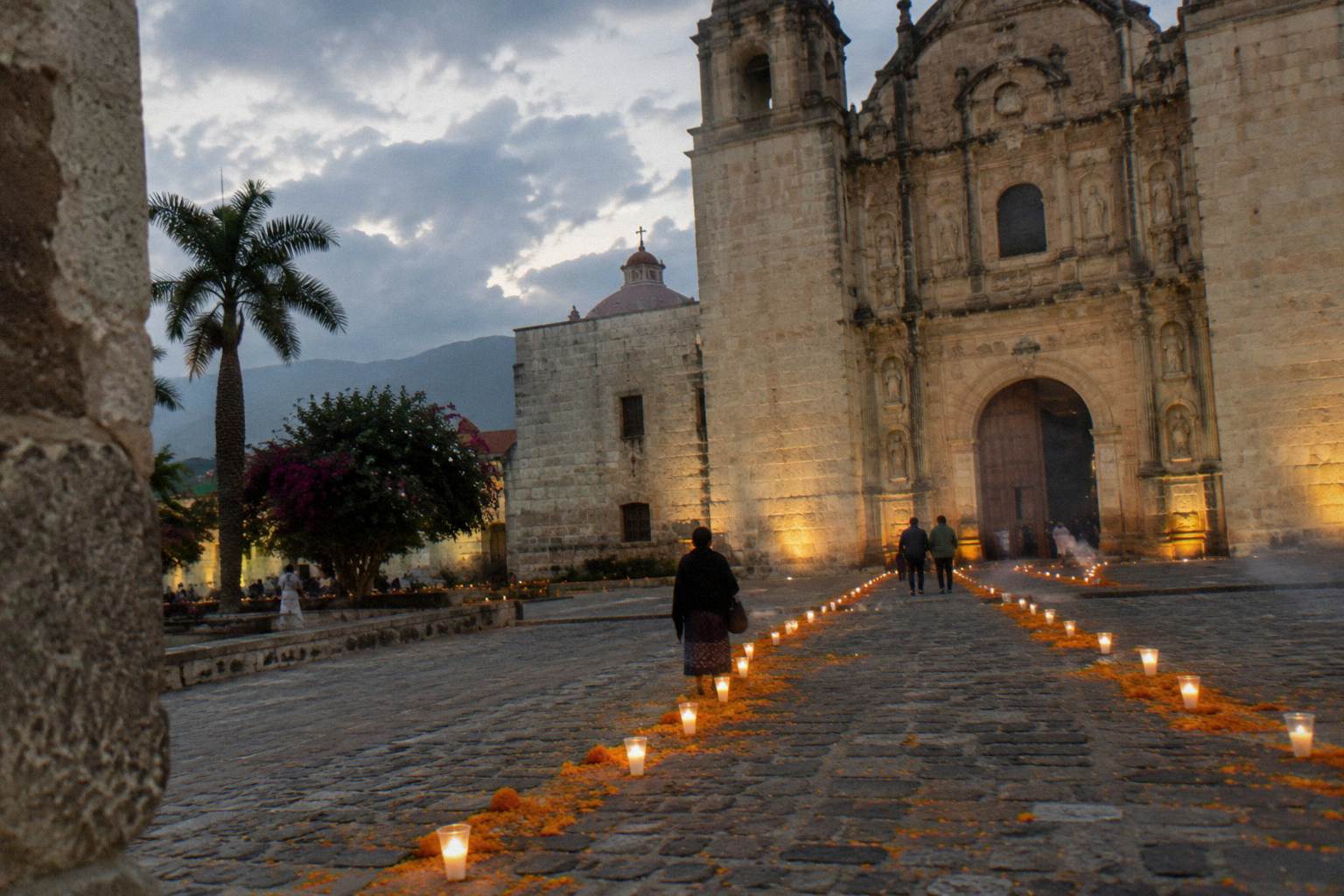
The short answer is that Oaxaca and Mexico City give you two different festivals, and the walking-tour test settles it. Oaxaca keeps Día de Muertos inside its neighbourhoods: family altars in doorways, sand tapestries on the cobbles, candlelit vigils in public cemeteries that are open without tickets. Mexico City stages a large central parade and big-ofrenda exhibitions. If you want to walk into the festival rather than watch it, Oaxaca wins.
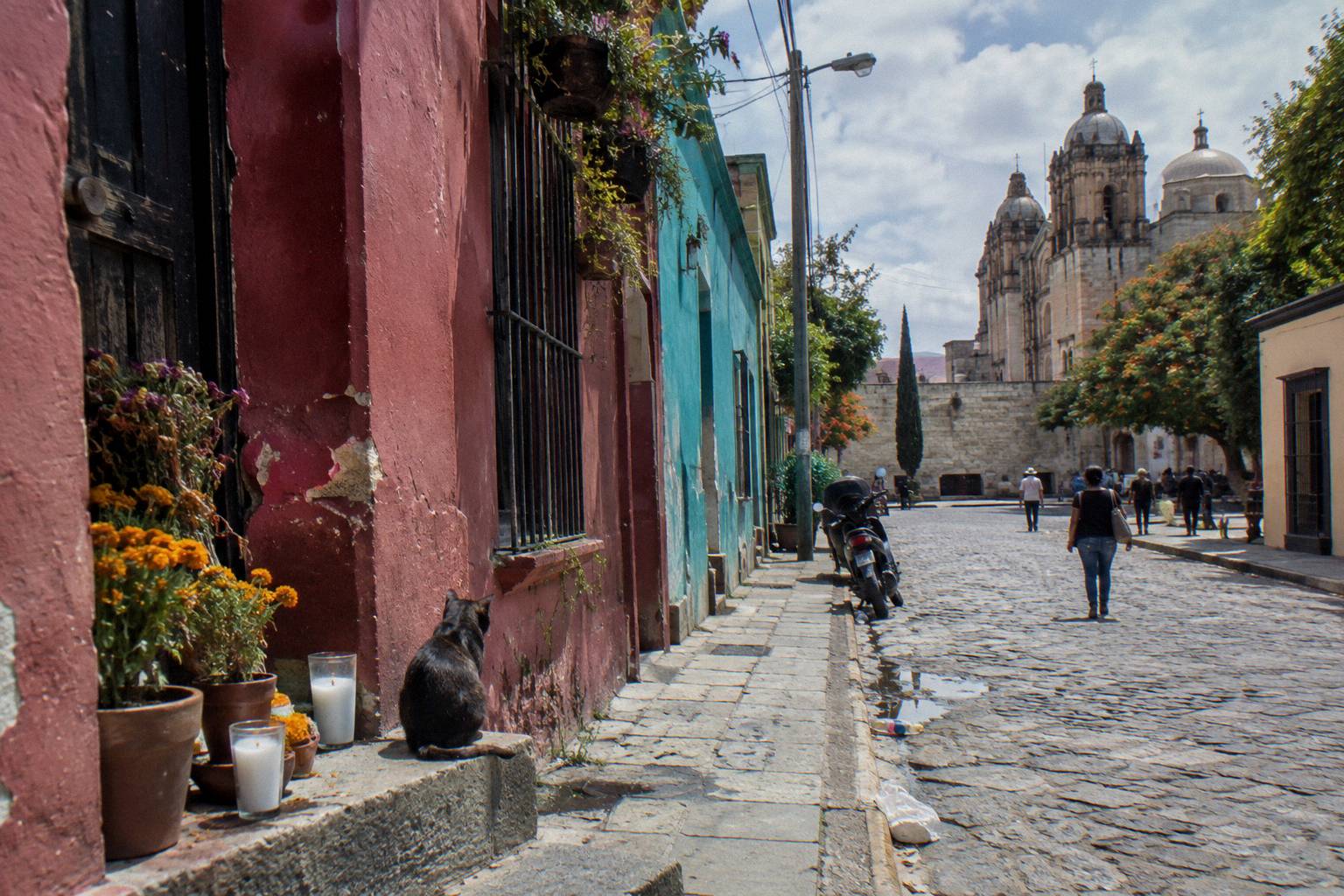
The difference shows up fastest in how each city handles the visitor. In Mexico City the marigold spectacle concentrates on a parade route and museum-scale ofrendas, which draws enormous crowds into a handful of blocks. Oaxaca spreads the same festival across the whole Centro Histórico, Xochimilco, Jalatlaco and the surrounding towns, so the celebration is something you drift through street by street rather than queue for. The public panteones at Xoxocotlán, Atzompa and San Felipe del Agua are families' own vigils, open without tickets, and the street altars that line the pedestrian routes cost nothing to look at either.
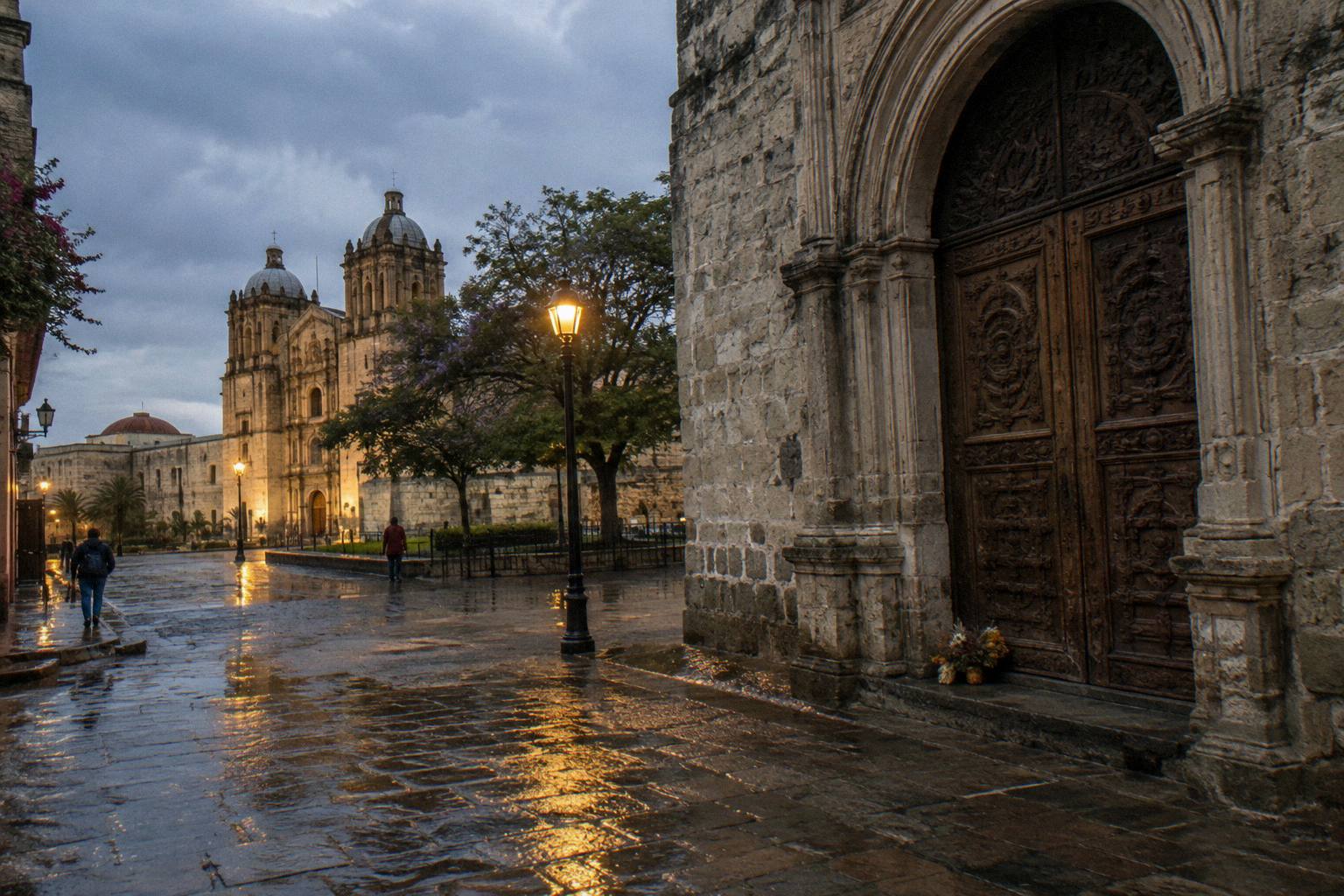
A walking tour fits Oaxaca's version unusually well because the city is compact and the festival decorates exactly the streets a visitor walks anyway. The andador and the squares hold altars, the markets hold pan de muerto and cempasúchil sellers, and the churches stay open around services. You can spend an entire festival evening moving between free spaces and never pass through a turnstile. The comparison comes down to this: both cities celebrate the same dates, yet in Oaxaca the celebration is legible on foot.
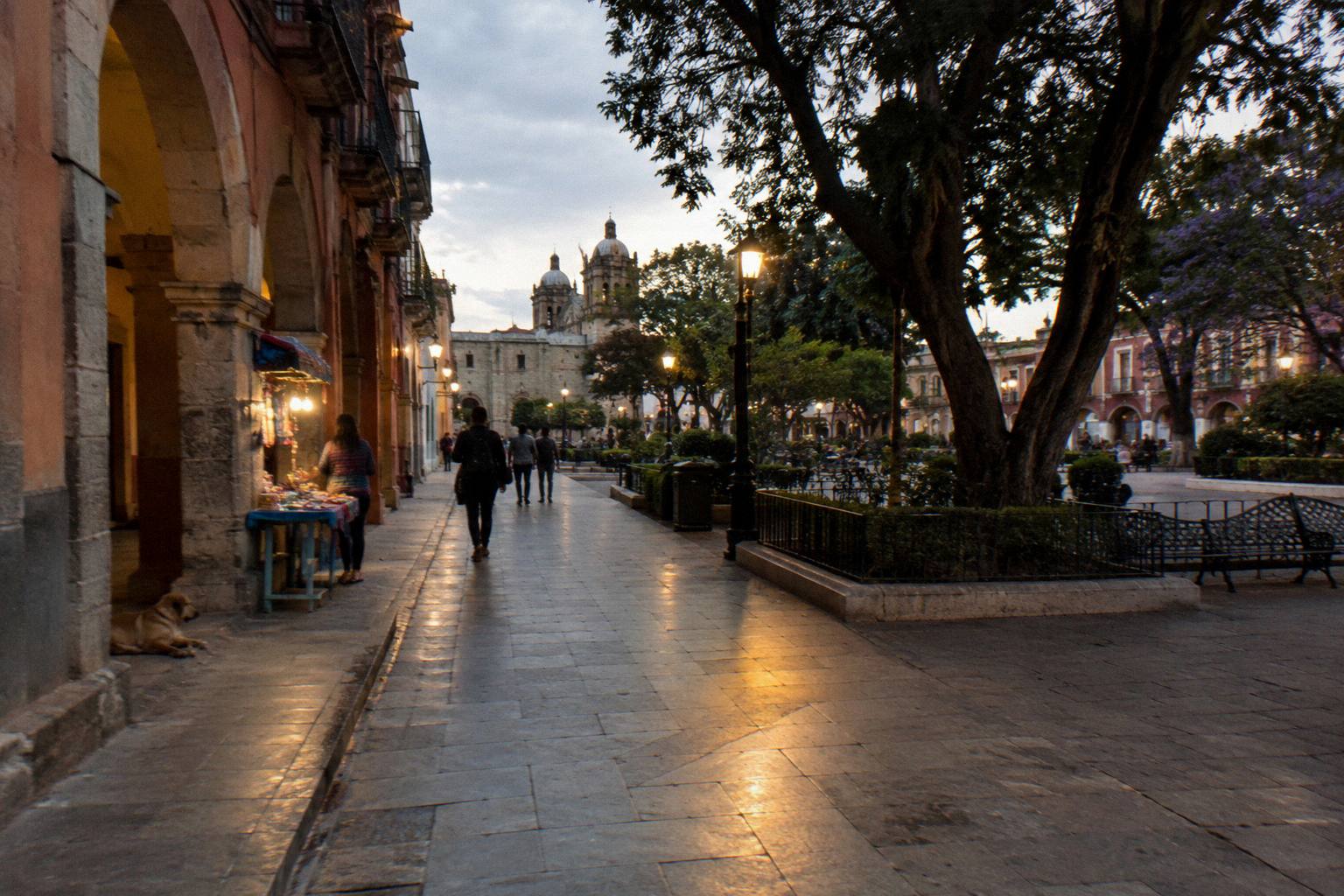
If you are leaning Oaxaca, the free walk scene there is a genuine planning tool, not a gimmick. This site covers the 10 free walking tours in Oaxaca, every one of them free, pay what you want, reserved through GuruWalk. They meet at fixed points in the Centro Histórico, Xochimilco and Jalatlaco, run 2 to 2 and a half hours, and several run in both English and Spanish. During the festival they do what a fixed-price guided product cannot easily do: they slot into the gaps between the cemetery vigils, which happen in the evening, and the daylight hours when the altars and markets are the main event.
The case for Mexico City is scale and spectacle, and it is a real case. If your priority is one enormous parade and big institutional ofrendas in a capital-city setting, Mexico City delivers that. What it does not deliver is the density of walkable, free, neighbourhood-level festival that Oaxaca has, because Oaxaca's whole historic core participates. The Free Things To Do In Oaxaca angle on the question is simple: during Día de Muertos this city hands you more free festival per street than almost any comparable destination.
“I have been to Oaxaca several times but had never been to the places covered in this tour. It was super interesting and Carlos was an excellent guide. Very highly recommended!”
Deb Mattina, GuruWalk review of Aztec Roots And Chocolate
What Should A Visitor Know Before Going?
A visitor should know that Oaxaca's Día de Muertos splits into genuinely free parts, including the cemeteries, altars, squares, churches, and market walkways, and ticketed parts sitting right beside them, so mixing them up is the classic mistake: the church of Santo Domingo is free, while the ex-convent museum next door charges 210 MXN for foreign adults. The free walks are pay what you want, reserved on GuruWalk, and no amount you might give is published anywhere.
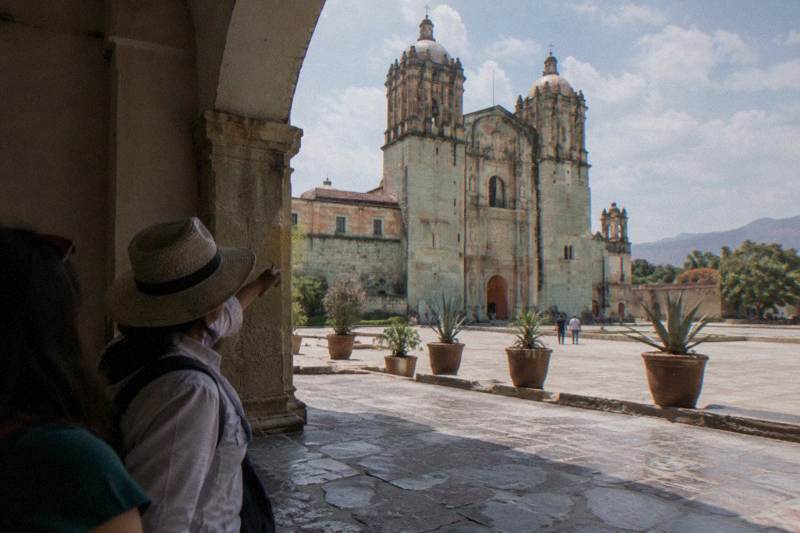
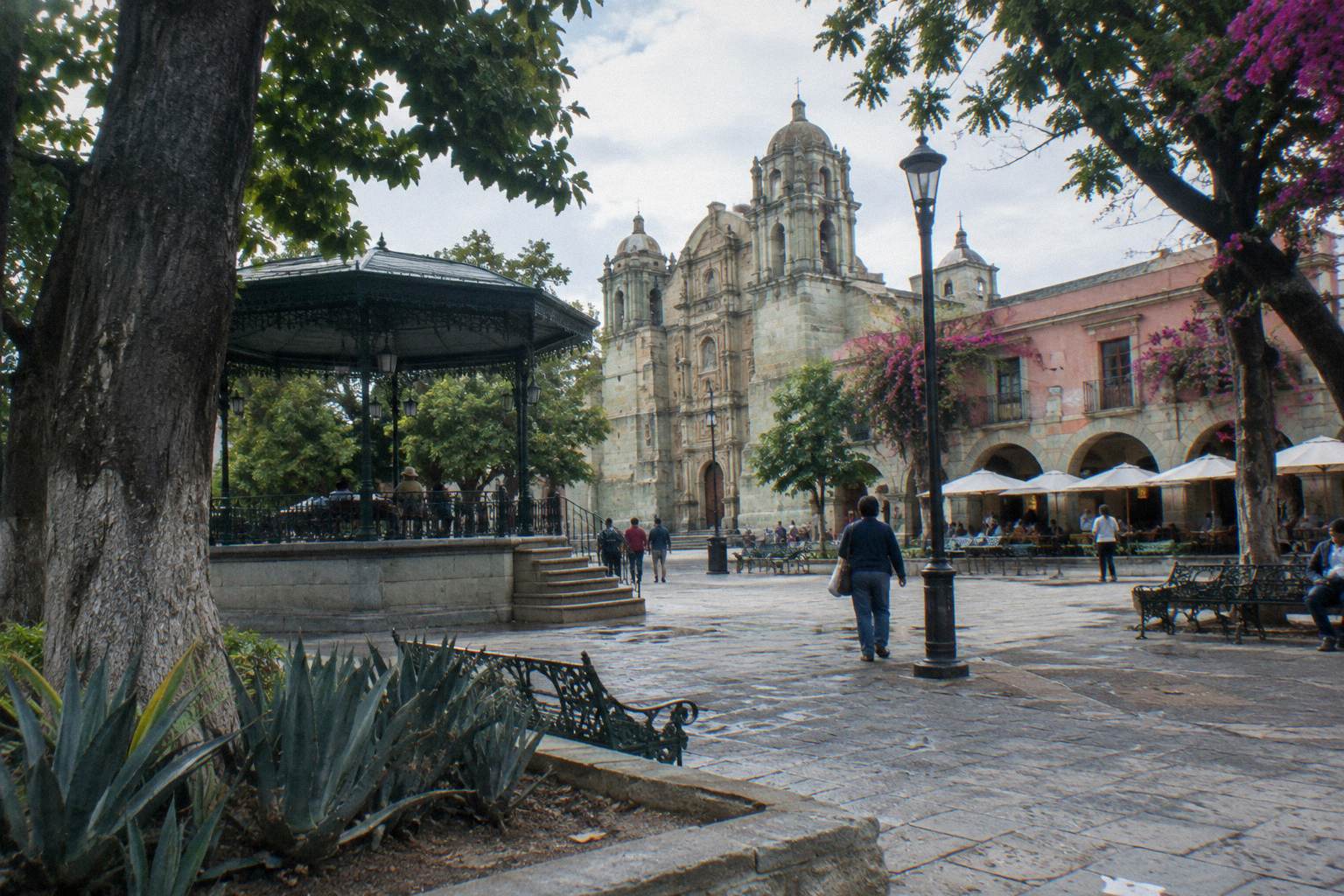
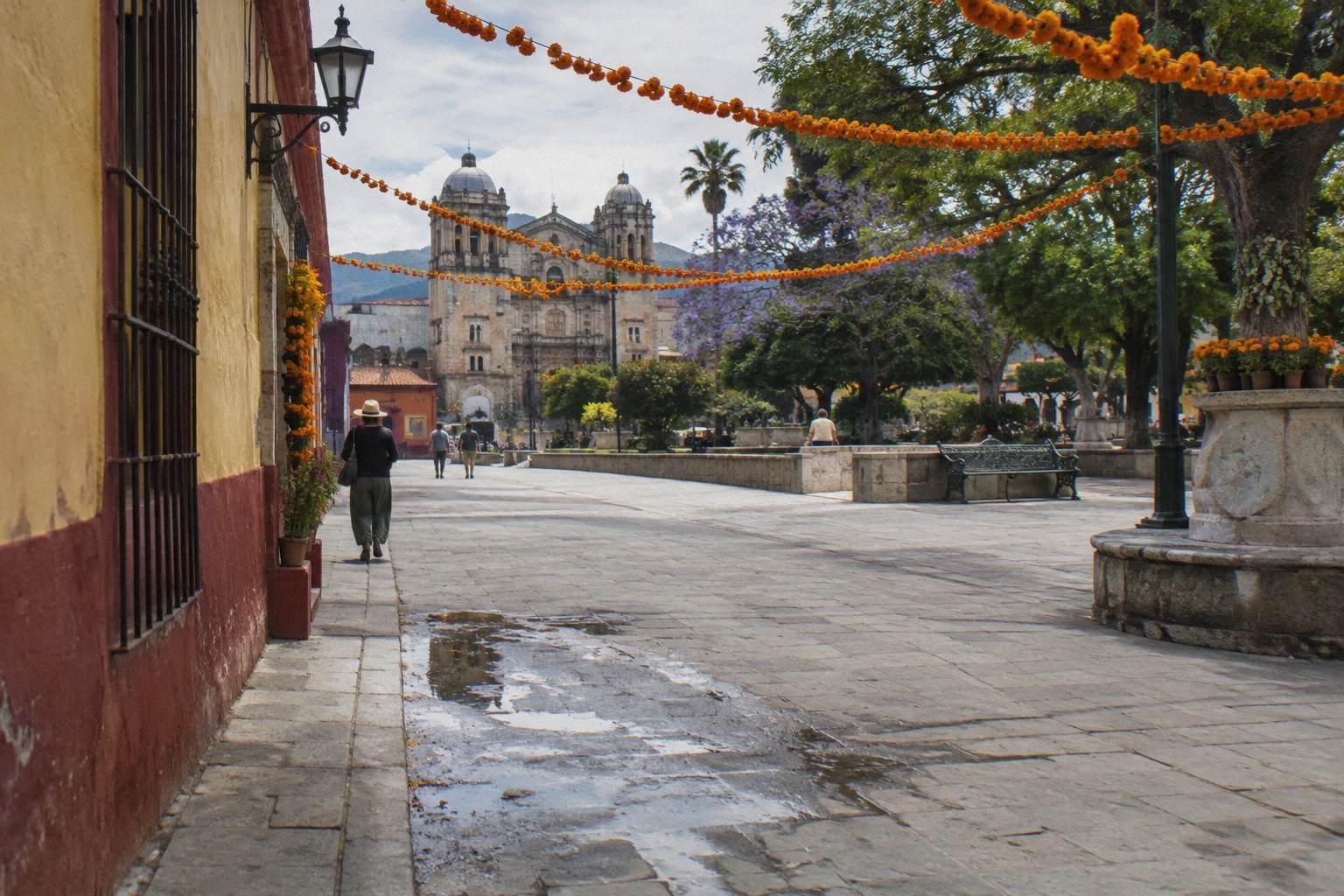
Start with the free core, because it is large. The Zócalo and the Alameda de León are public squares with no ticket, and during the festival they fill with ofrendas and marigold stalls. The Andador Macedonio Alcalá is a pedestrian street, equally open, and it is where much of the street-level display concentrates. The Templo de Santo Domingo de Guzmán is a public church and entering it is free; that fact is worth holding firmly, because the Museo de las Culturas de Oaxaca in the ex-convent beside it is a separate, ticketed INAH museum at 210 MXN for foreign adults and 105 MXN for Mexican nationals. One doorway is free, the next one over is not, and the same block holds both.
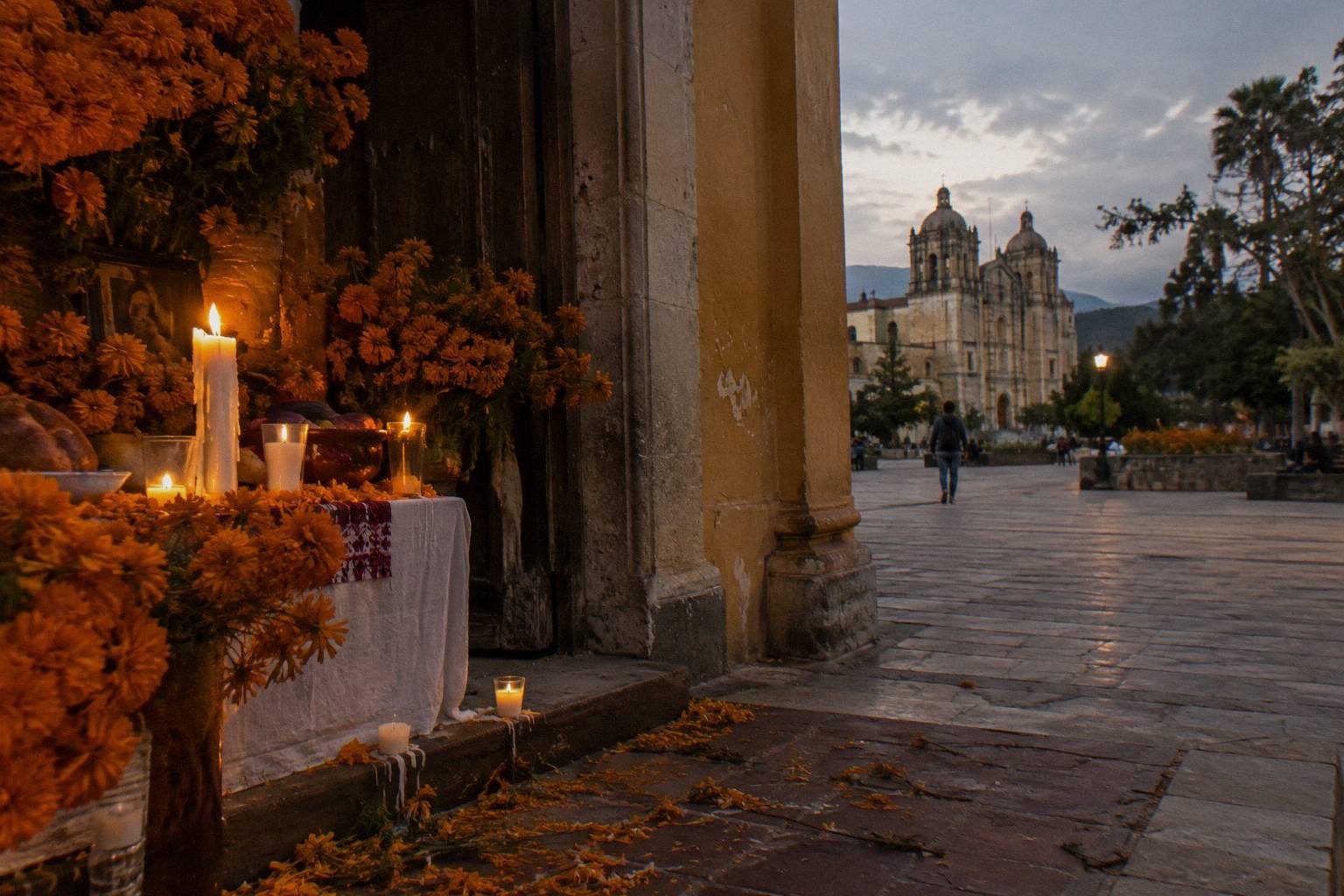
The cemeteries need the same careful framing. The public panteones at Xoxocotlán, Atzompa and San Felipe del Agua are open without tickets during the vigils, and so are the street altars. These are families' own observances, not a performance staged for visitors: you arrive as a guest at something that exists whether or not anyone travels to see it. What is firmly on record is the paid contrast: Monte Albán, the great archaeological zone outside the city, is ticketed, 210 MXN for foreign adults and 105 MXN for Mexican nationals, per INAH. A festival trip that plans a ruins day should carry that figure.
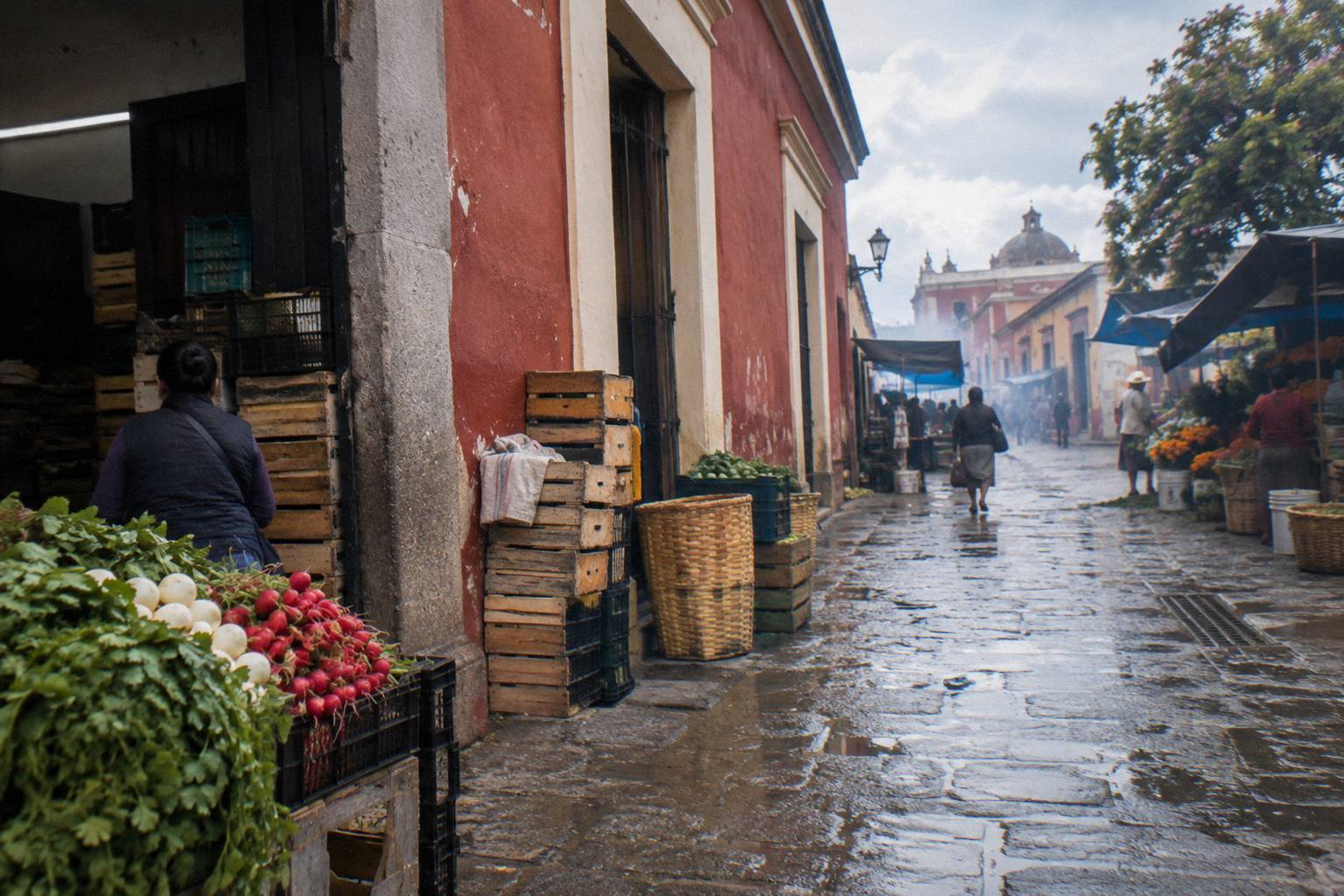
Then there is the timing question: late October and early November mark one of Oaxaca's busiest moments of the year, and the city's own calendar does not revolve around it alone. Readers planning further ahead should know the Guelaguetza, the state's other huge festival, usually falls on the last two Mondays of July, with free first-come upper sections at the auditorium on Cerro del Fortín and ticketed lower sections. That is a separate festival from Día de Muertos, but it shapes everything about how crowded Oaxaca feels at festival times, and the Guelaguetza free events and walking tours guide covers it in full. For Día de Muertos itself, the practical takeaway is simpler: the vigils are evening events, the altars are all-day, and a walking tour slots naturally into the daylight hours.
One more thing worth knowing before you commit to either city. Nobody connected to this site has taken these walks or attended these vigils; every fact here comes from the tours' own pages and the official sources cited above. That matters during festival season, because plenty of content about Día de Muertos is written in a tone that implies the writer was there. The verifiable facts are the ones that travel well: prices, free-entry conditions, meeting points, durations, languages and review counts. Everything else is atmosphere, and you will form your own within an hour of arriving.
How Does A Free Walking Tour Fit In?
A free walking tour fits in as the daylight spine of a Día de Muertos trip. The walks run 2 to 2 and a half hours, they are free with pay what you want, and they cover the Centro Histórico, Xochimilco and Jalatlaco, which are exactly the neighbourhoods the festival decorates. Reserve a place on the GuruWalk page for the walk you want, meet at the stated point, and keep your evenings free for the cemeteries and altars.
The mechanics are refreshingly thin, and it is worth being precise about them because "free tour" raises questions. Every one of the 10 free walking tours in Oaxaca is a real listing run by an independent local guide on GuruWalk, this site neither operates nor is affiliated with GuruWalk, and the entire cost model is pay what you want. No group sizes, no cancellation steps, no contribution mechanics are published, and none should be invented: the fact that travels is that the walk is free, pay what you want, reserved on its platform. If a question about how it works comes up, that one sentence is the whole answer, and the walk's own page holds anything further.
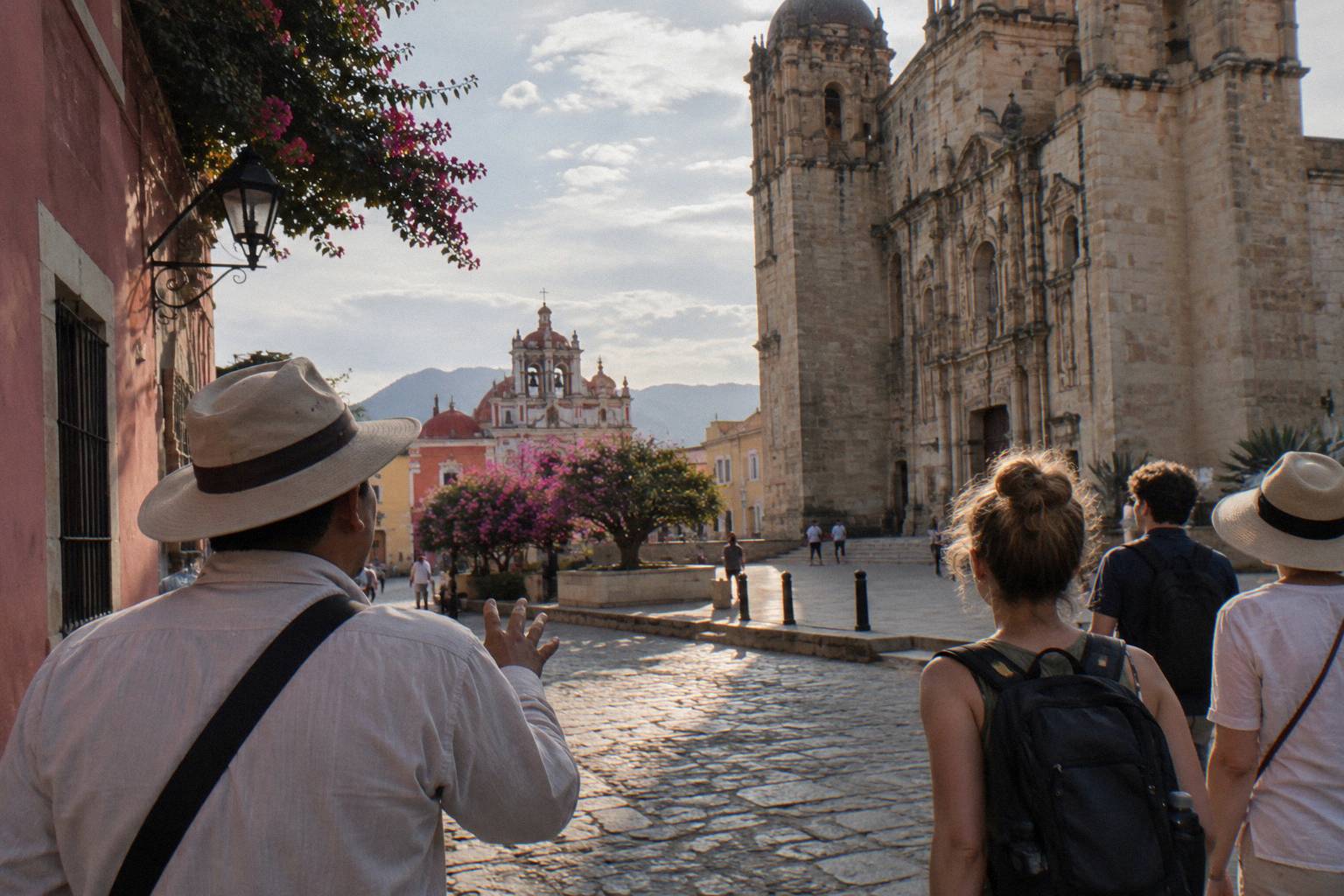
For the festival specifically, the walk that anchors a first visit is the Top Free Walking Tour of Oaxaca's Historic Center with a Professional Local Guide, run by Free Tour Europe, rated 4.9 out of 5 across 271 GuruWalk reviews, meeting at Jardín El Pañuelito, running 2 hours in English and Spanish. It is the related pick for this article because the historic center is where much of the festival's street display concentrates, and a 2-hour walk there leaves the rest of the day for the markets and the evening for the vigils. The walk has its own page on this site and can also be explored on its tour page here.
“Abel was a really friendly guide constantly cracking jokes and making small talk with us. My husband and I really enjoyed this tour, Abel really shared with his heart and that’s the true Oaxaca spirit which he explained to us.”
Atiqah, GuruWalk review of Professional Guide By Free Tour Europe
Beyond that anchor, the trio of walks most relevant to a festival trip covers the Centro Histórico and Santo Domingo category. Xochimilco Start, Through Time, the Around Oaxaca City walk by the operator Around Oaxaca city is rated 4.99 out of 5 across 496 GuruWalk reviews and meets at Plaza de la Cruz de Piedra in Xochimilco, in English and Spanish. The Essential History And Art Walk by Estación, 4.63 out of 5 across 190 GuruWalk reviews, meets at the Museo de los Pintores Oaxaqueños. Local Secrets From Macedonio Alcalá, by Oaxaca Free Walking Tour, rated 4.59 out of 5 across 99 GuruWalk reviews, meets at the Teatro Macedonio Alcalá and runs in English. Each is free, pay what you want, on GuruWalk.
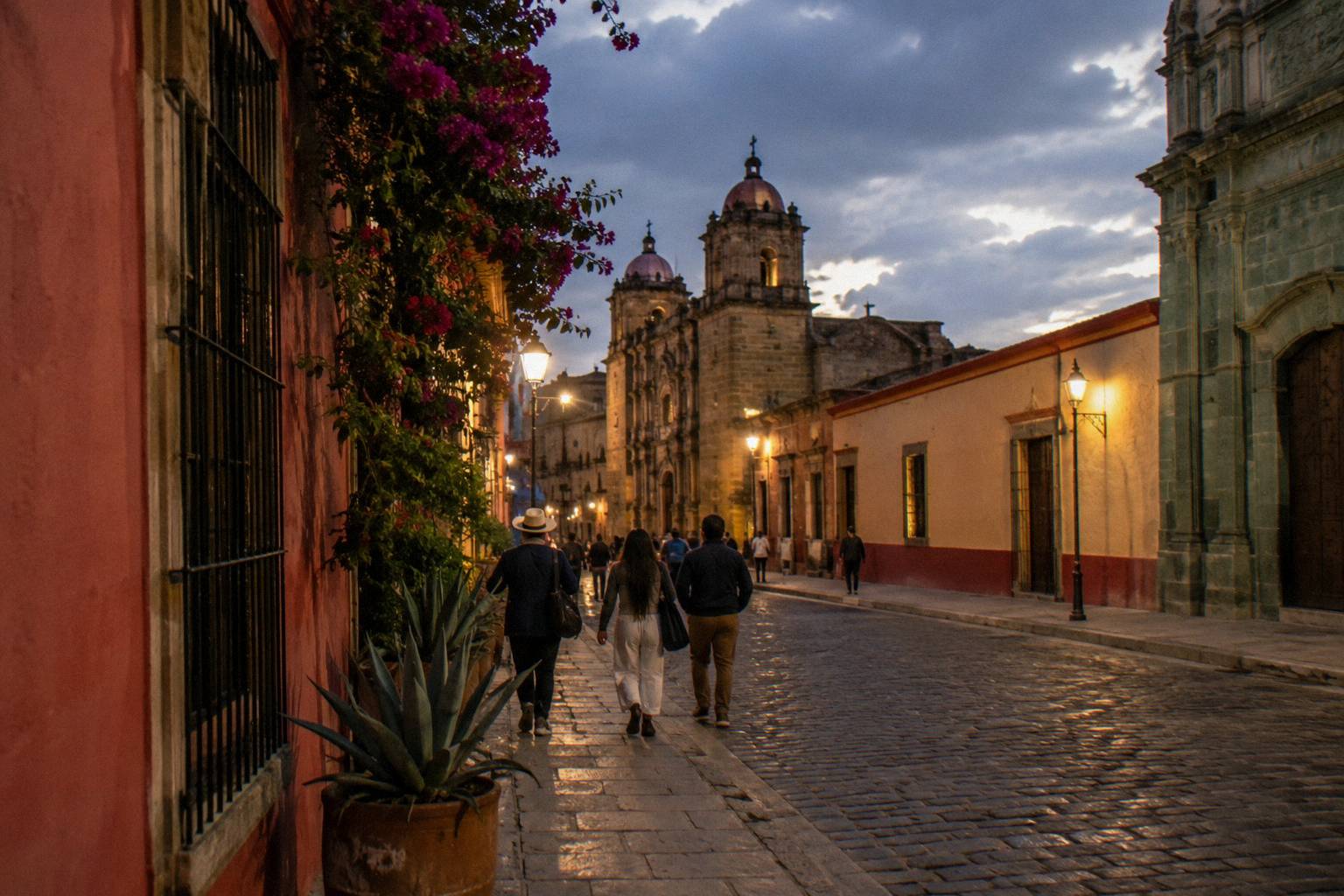
What the walk does during festival week is contextualise what you will see at night. A guide can put names to the streets, the churches and the squares that the altars and sand tapestures decorate, and the walk's route neighbourhood is stated on its own page. What this article will not do is describe a route for any walk beyond its meeting point and neighbourhood, because that is all that is published. The meeting points, durations and languages above are the verifiable skeleton, and they are enough to plan around: morning walk in the center, afternoon in the markets, evening at a panteón.
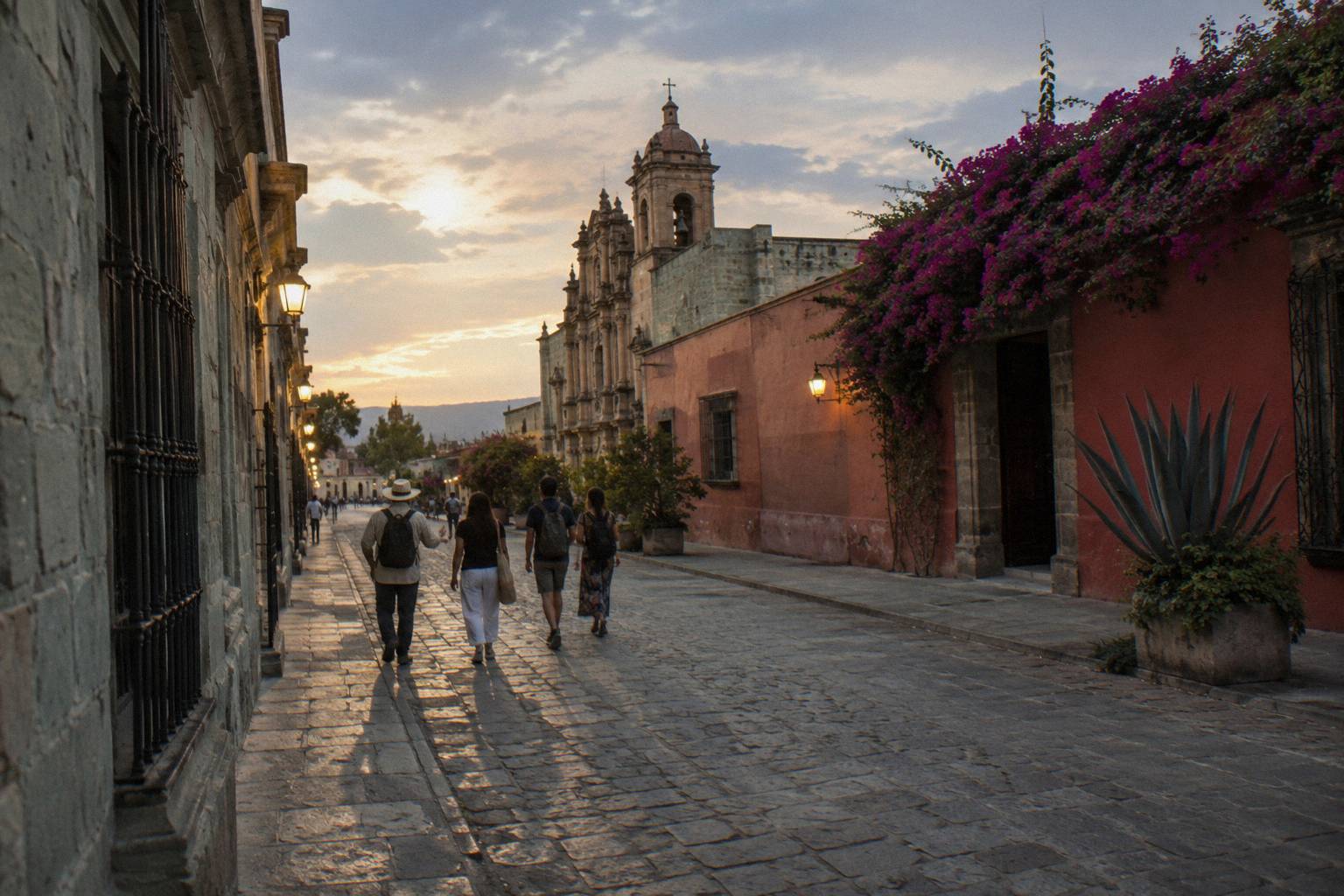
The comparison with Mexico City lands here too. Mexico City has paid guided options around its parade and ofrendas, and its festival geography is stretched across a much larger city, which pushes visitors toward transport and tickets. Oaxaca's compactness is the quiet advantage: the walks, the altars, the markets and the churches sit inside the same walkable core, so the free layer of the festival and the free layer of the city are the same layer. A visitor who spends three festival days in Oaxaca can build almost the entire programme from free spaces and pay-what-you-want walks, paying only for food, market goods and any ticketed museum or ruin they choose.
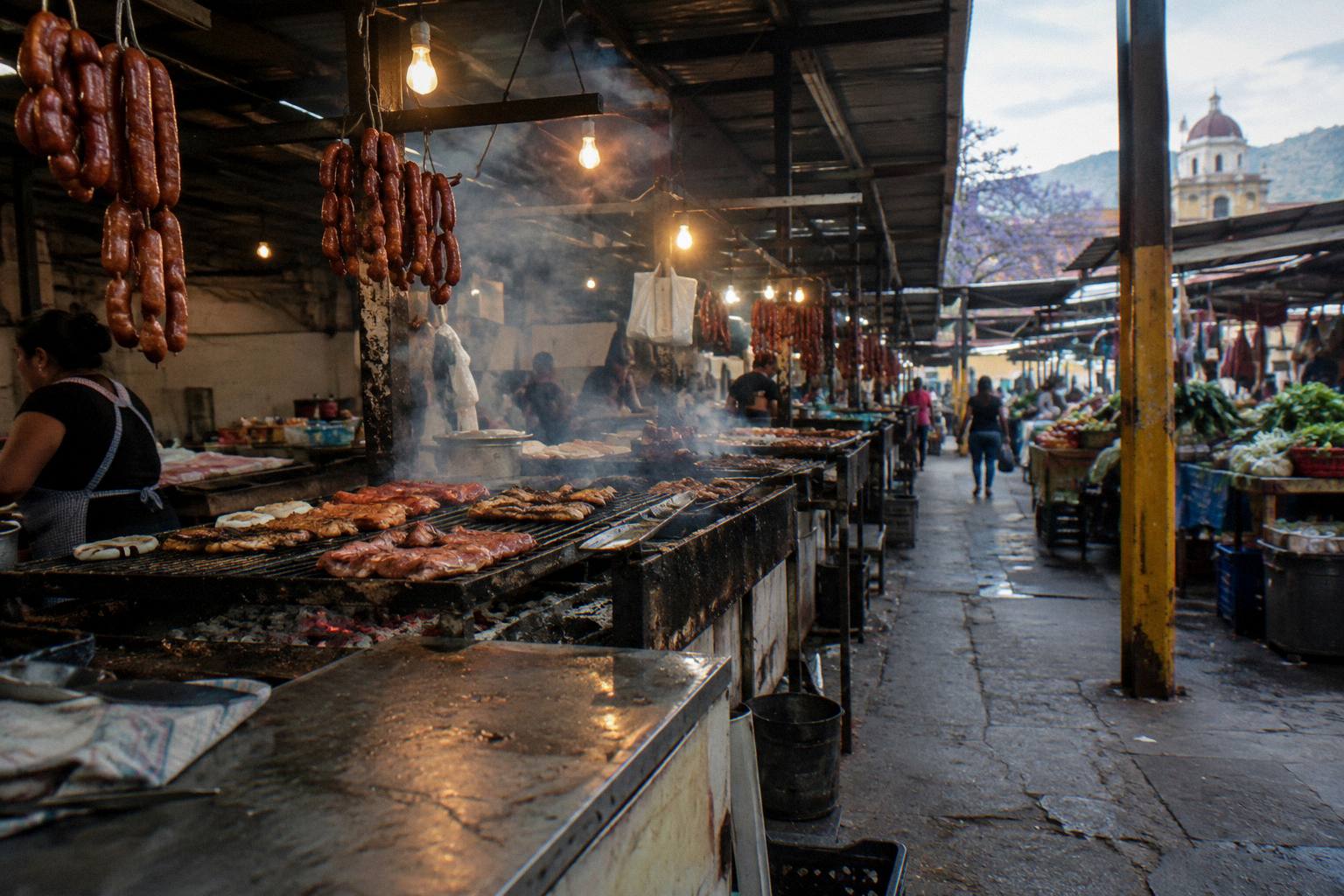
Where Do Free Walking Tours Meet Nearby?
The walks meet at fixed points across the three festival-decorated neighbourhoods. In the Centro Histórico: Cosijoeza 110A, Jardín El Pañuelito, the Museo de los Pintores Oaxaqueños, the Teatro Macedonio Alcalá and ARIPO next to the fountain. In Xochimilco: Plaza de la Cruz de Piedra, plus Café Kapel Nana and Eden MiniGalería for the markets walk. In Jalatlaco: the Iglesia de San Matías Jalatlaco. Every meeting point is printed on the walk's GuruWalk page.
Two walks share the Cosijoeza 110A meeting point in the Centro: the By Locals walk, run by Oaxaca by locals, rated 4.63 out of 5 across 1,165 GuruWalk reviews, 2 hours, English and Spanish; and the Street Art Of Jalatlaco walk, same operator, rated 4.91 out of 5 across 636 GuruWalk reviews, 2 hours, English. The By Locals walk is the most-reviewed free walk in the city and a natural first walk for a festival visitor who wants the center explained before the altars go up at night.
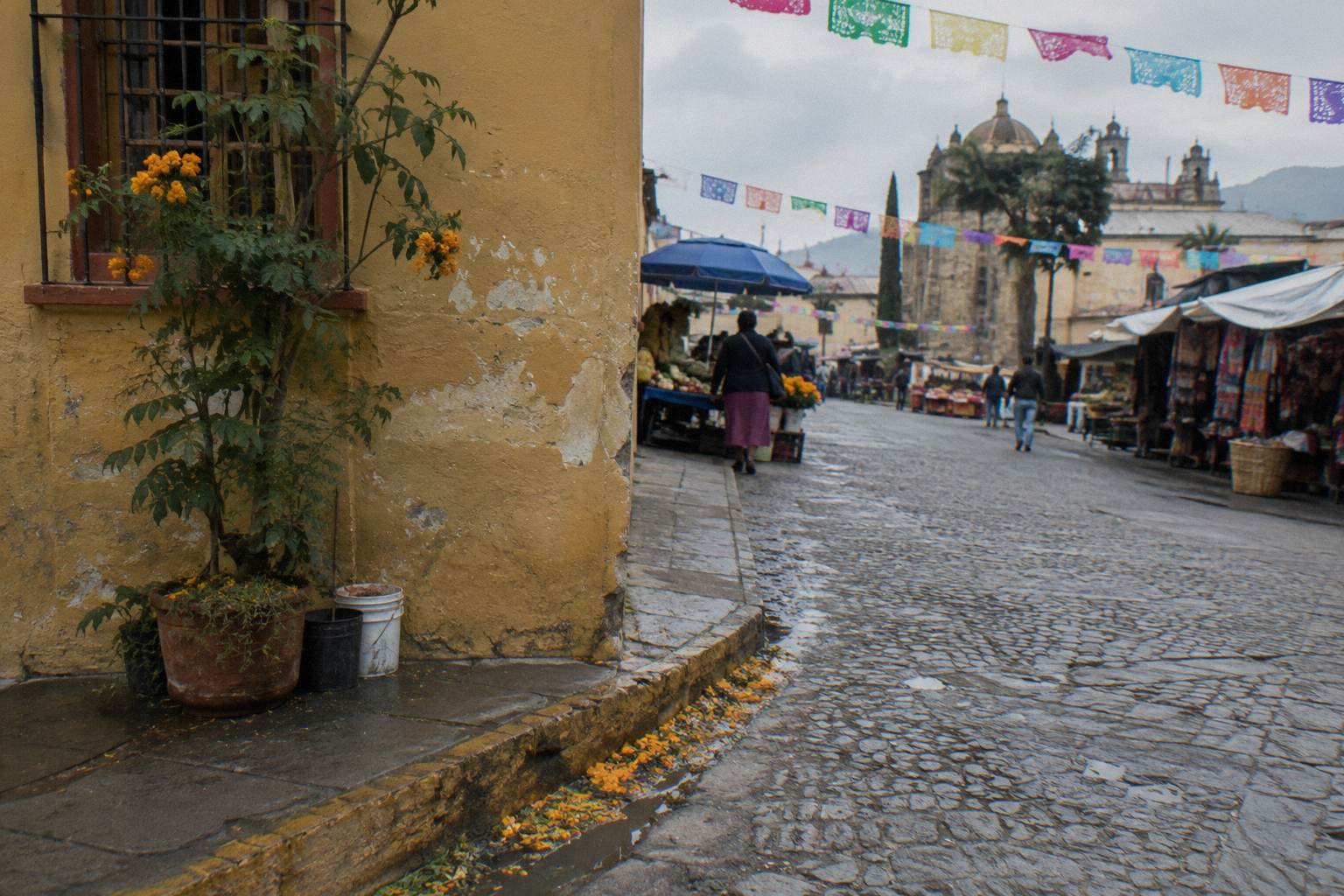
Jalatlaco deserves its own paragraph in any Día de Muertos comparison, because the neighbourhood's murals and its church square make it a festival draw in its own right. Two walks serve it from the category the site calls Jalatlaco And The Street Murals: the street art walk above, meeting in the Centro at Cosijoeza 110A; and the Jalatlaco Murals And Art Workshops walk, rated 4.93 out of 5 across 96 GuruWalk reviews, 2 hours, English and Spanish, meeting at the Iglesia de San Matías Jalatlaco. Another Xochimilco walk, Xochimilco Walking Tour: Aztec roots, Colonial Aqueduct and the best Oaxacan Chocolate, rated 4.78 out of 5 across 23 GuruWalk reviews, meets at Plaza de la Cruz de Piedra, the same meeting point as the Around Oaxaca City walk. It lasts 2 hours and is offered in English and Spanish.
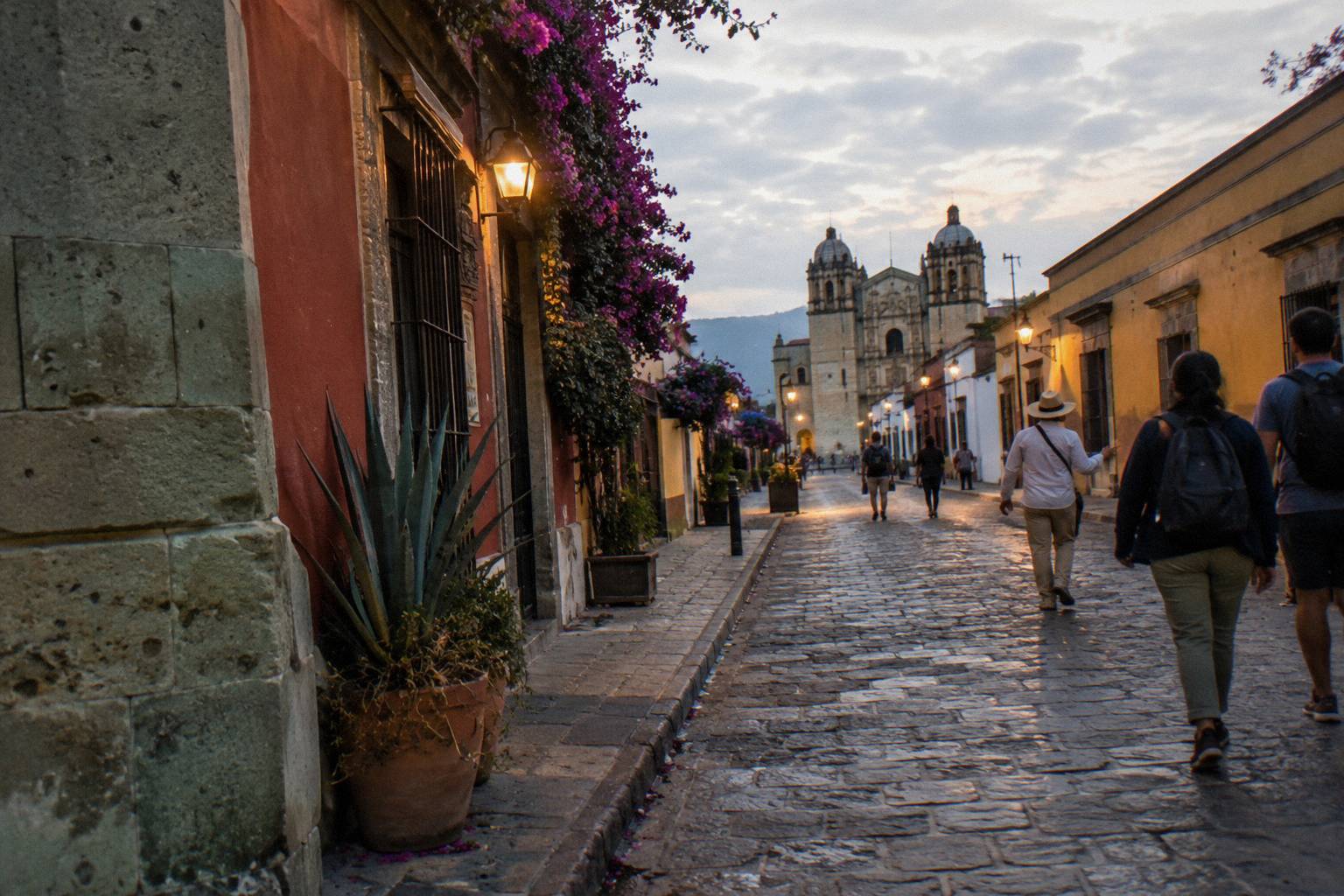
The practical festival use of all these meeting points is straightforward. You pick the neighbourhood you want to be in before the evening vigil, join the walk that meets there, and let the walk end with you already standing in the right part of town. The table below is the full meeting-point picture for the walks a festival visitor is most likely to use.
| Walk | Meets at | Neighbourhood | Duration | Languages | Rating on GuruWalk |
|---|---|---|---|---|---|
| By Locals | Cosijoeza 110A, Centro | Centro Histórico And Santo Domingo | 2 hours | English and Spanish | 4.63 out of 5, 1,165 reviews |
| Professional Guide By Free Tour Europe | Jardín El Pañuelito | Centro Histórico And Santo Domingo | 2 hours | English and Spanish | 4.9 out of 5, 271 reviews |
| Street Art Of Jalatlaco | Cosijoeza 110A, Centro | Jalatlaco And The Street Murals | 2 hours | English | 4.91 out of 5, 636 reviews |
| Xochimilco Start, Through Time | Plaza de la Cruz de Piedra, Xochimilco | Centro Histórico And Santo Domingo | 2 hours 30 minutes | English and Spanish | 4.99 out of 5, 496 reviews |
| Markets, History And Art Walk | Café Kapel Nana and Eden MiniGalería | Xochimilco And The Markets | 2 hours | English and Spanish | 5 out of 5, 28 reviews |
One caution belongs here as well. Meeting points are written exactly as each walk's page gives them, with no directions or walking times added, because none are published. During festival week the center is busy, so the meeting point, not a guess about walking time, is what to plan from. Every reservation happens on the walk's GuruWalk page, where the meeting point, duration and language for that specific walk are the controlling facts. Language matters more than visitors expect: the walks split between English-and-Spanish and English-only, and the table above states which is which, because only a walk's own page can tell you otherwise.
Mistakes That Trip People Up At Día De Muertos
The main mistakes are predictable: treating the ex-convent museum as free because the church beside it is, expecting INAH's Sunday free entry as a foreigner when it applies only to Mexican nationals and residents with ID, assuming Monte Albán or Hierve el Agua can be walked to from the center when both sit outside the city, and hunting for a published tipping norm for free tours when none exists, since every walk runs on pay what you want.
The first mistake is the Santo Domingo one, and it happens because the block looks like a single attraction. It is three: the Templo de Santo Domingo de Guzmán, free to enter as a public church; the Museo de las Culturas de Oaxaca in the ex-convent, a ticketed INAH museum at 210 MXN for foreign adults; and the Jardín Etnobotánico behind it, which admits visitors on guided visits only, with no self-guided entry. A visitor who plans "Santo Domingo, free" has planned one third of it correctly.
The second is the Sunday rule. INAH's free Sunday entry at its sites, including Monte Albán and the museums, applies to Mexican nationals and residents of Mexico with ID. Visitors from abroad pay, and the figure at Monte Albán and the Museo de las Culturas is 210 MXN for foreign adults. The third is geography: Monte Albán, Mitla, Yagul, Hierve el Agua, El Tule and Tlacolula all lie outside the city, and none is a walk from the Zócalo. Hierve el Agua and the Árbol del Tule churchyard are community-charged, not free, and their fees are separate from anything INAH runs. The fourth mistake is festival-specific: assuming the cemeteries are a show with a schedule and a price. They are open without tickets as families' vigils, and nothing further about fees is published.
The final mistake cuts across everything: reading "free" as a trick that needs decoding. On this site the walks are free, pay what you want, reserved on GuruWalk, run by independent local guides. There is no set tipping norm for these walks, and no amount will be judged good, generous or too little. What can be compared is plain prices elsewhere: 210 MXN is the price of a foreign adult ticket at Monte Albán, and that is a fact about a ticket, not a suggestion about a walk. Plan the paid parts with their real figures, take the free parts at their word, and the comparison with Mexico City answers itself: Oaxaca during Día de Muertos is a city you can enter on foot, for nothing, and be inside the festival within a block of your door.
Common Questions About Day Of The Dead In Oaxaca
Is Day Of The Dead Better In Mexico City Or Oaxaca? A Walking Tour View?
For a visitor who wants to walk through the festival rather than watch it, Oaxaca. Its public panteones at Xoxocotlán, Atzompa and San Felipe del Agua and its street altars are open without tickets, its squares and churches are free to enter, and its 10 free walking tours, all pay what you want on GuruWalk, cover the very neighbourhoods the festival decorates.
Are The Day Of The Dead Cemeteries In Oaxaca Free To Enter?
Yes, the public panteones at Xoxocotlán, Atzompa and San Felipe del Agua and the street altars are open without tickets. They are families' own vigils rather than ticketed events, and no fee schedule is published for them, so no other charge should be assumed.
Is Santo Domingo Church Free During The Festival?
Entering the Templo de Santo Domingo de Guzmán is free; it is a public church. The Museo de las Culturas de Oaxaca in the ex-convent beside it is separate and ticketed, 210 MXN for foreign adults and 105 MXN for Mexican nationals, and the Jardín Etnobotánico behind admits visitors on guided visits only.
How Much Should You Tip A Free Walking Tour Guide In Oaxaca?
No amount is published, and none will be judged here. Every walk on this site is free, pay what you want, reserved on GuruWalk. The reader decides what to give, if anything, and the walk's own page is the place for anything further about how it works.
Do The Free Walking Tours Run In English?
Several do. The By Locals walk, the Free Tour Europe historic center walk, the Around Oaxaca City walk and the markets and Jalatlaco walks run in English and Spanish. The Street Art Of Jalatlaco walk and the Local Secrets walk run in English. Each walk's GuruWalk page states its languages.
Where Do The Free Walking Tours Meet?
In the Centro Histórico: Cosijoeza 110A, Jardín El Pañuelito, the Museo de los Pintores Oaxaqueños, the Teatro Macedonio Alcalá and ARIPO next to the fountain. In Xochimilco: Plaza de la Cruz de Piedra and Café Kapel Nana and Eden MiniGalería. In Jalatlaco: the Iglesia de San Matías Jalatlaco.