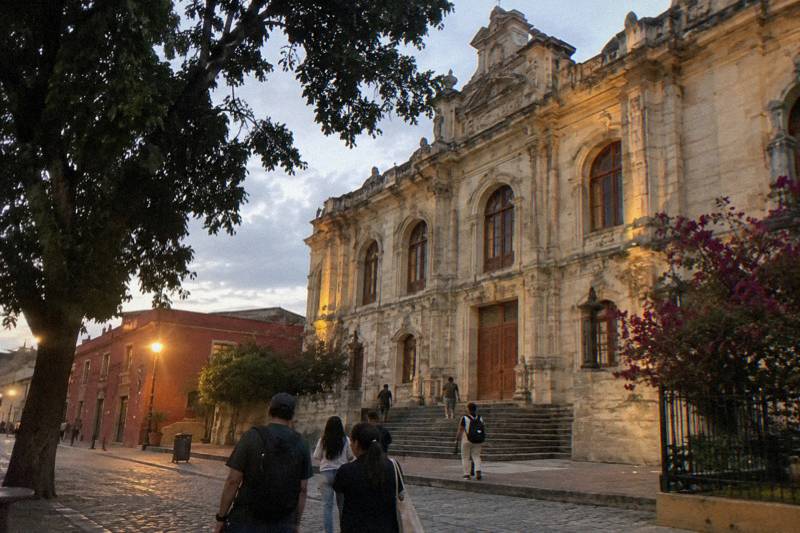
Can Tourists Celebrate Day Of The Dead In Oaxaca? Free Events And A Guided Walking Tour
Yes, tourists can join Day of the Dead in Oaxaca: cemeteries and street altars are open without tickets, the Zócalo and churches are free, and a free GuruWalk walking tour adds context.
In Short
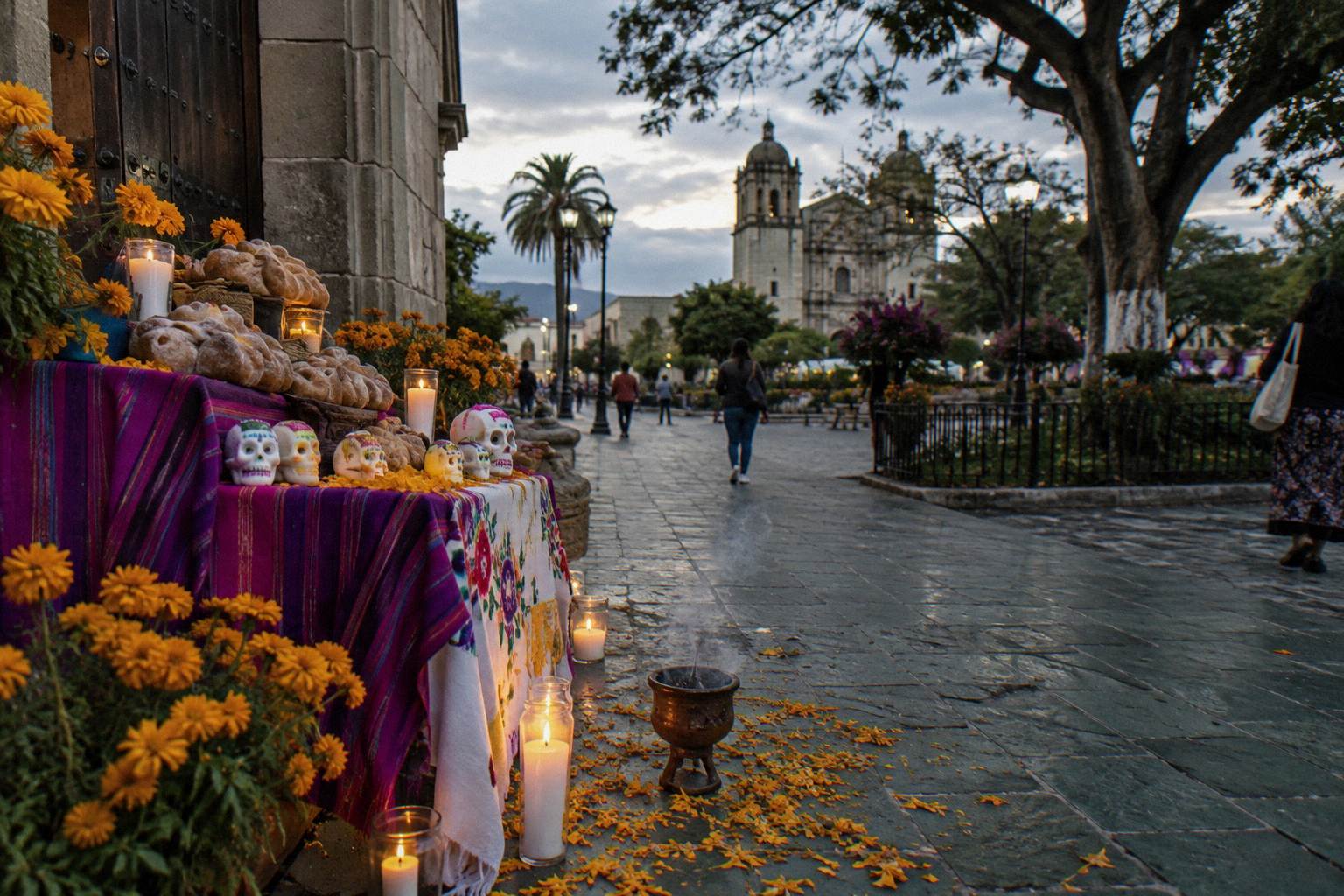
Yes. Tourists can take part in Day of the Dead in Oaxaca, and most of what the festival is happens in public space. The public cemeteries and street altars are open without tickets, the Zócalo and Alameda de León are public squares anyone can walk into, and entering the Templo de Santo Domingo de Guzmán is free. A free, pay what you want walking tour reserved on GuruWalk adds the context that turns decoration into understanding.
This question sits inside the Day of the Dead free events guide. For the wider picture of how these walks work, see how tip based tours operate in Oaxaca.
What Is The Short Answer?
The short answer is yes. The festival is unusually open to visitors, and the reason is simple: so much of it takes place outdoors, out in the open, where visitors can experience it directly rather than being kept at a distance from the celebrations. The public panteones and street altars are open without tickets, as families' own vigils, and the Zócalo, the Alameda de León and the Templo de Santo Domingo de Guzmán cost nothing to enter. The paid edges are real but limited: the Museo de las Culturas de Oaxaca beside Santo Domingo charges foreign adults 210 MXN, and Monte Albán, outside the city, charges foreign adults 210 MXN. Everything the festival itself puts on in the streets is walk-in.
Día de Muertos is not a ticketed production with a perimeter and a gate. It is a set of family vigils, church services and street-level altars that spill across the whole centro histórico, and the city's ordinary free geography, its squares, its pedestrian street, its open churches, becomes the venue. A visitor who walks out of any hotel in the center will encounter the festival without arranging anything. What a visitor cannot do is treat a cemetery vigil as a show: these are families' own observances, held in public because the culture holds them in public, and the openness is an invitation to be present respectfully rather than a license to spectate.
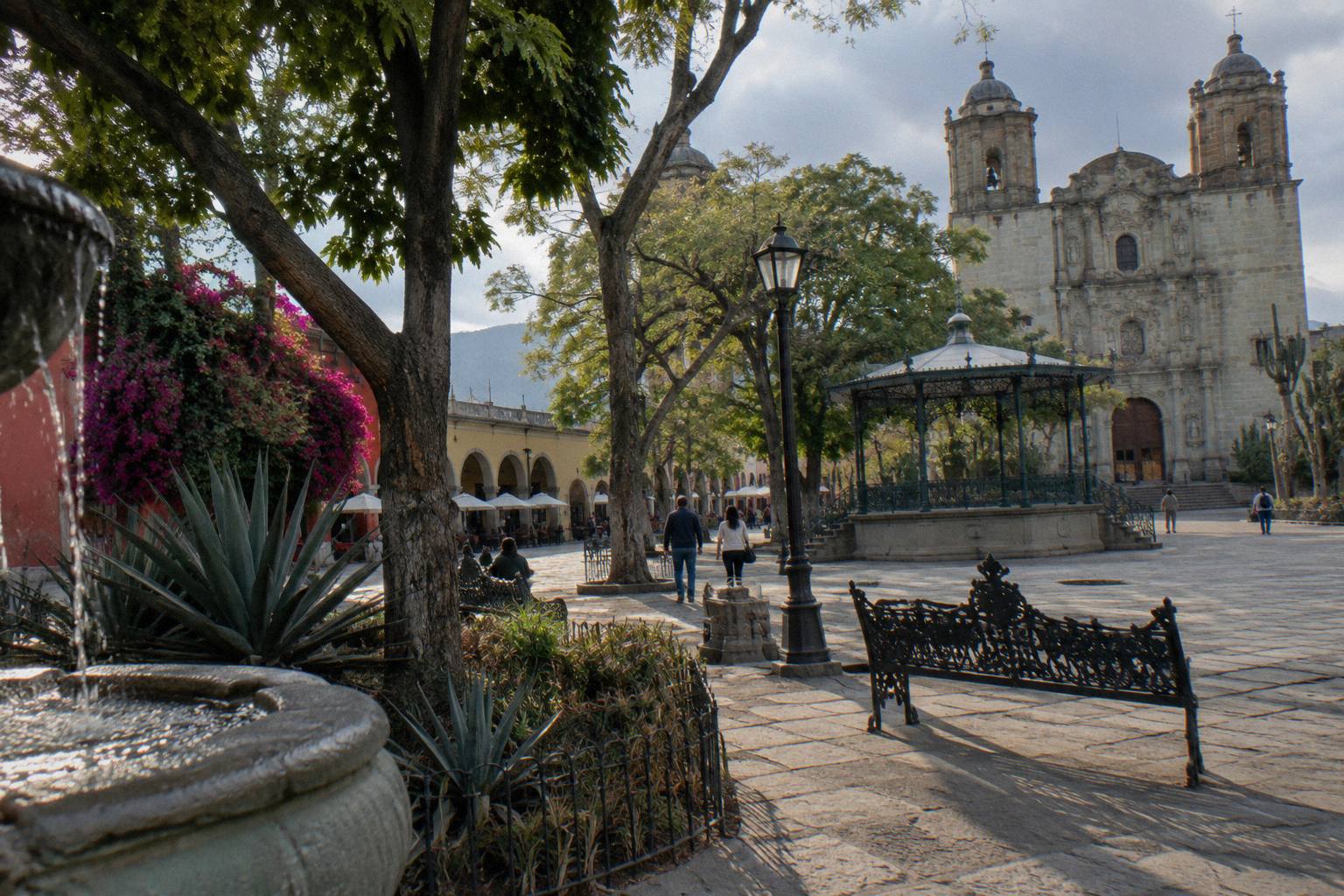
The free layer is genuinely deep. The Zócalo and the Alameda de León are public squares with no ticket, the Andador Macedonio Alcalá is a pedestrian street anyone can walk, and entering the Templo de Santo Domingo de Guzmán is free. The public cemeteries associated with the festival, and the street altars, are open without tickets. The paid layer sits mostly beside the festival rather than inside it: the ex-convent museum next to Santo Domingo, at 210 MXN for foreign adults, and the archaeological sites outside the city, Monte Albán at 210 MXN for foreign adults. Neither is required to experience the festival itself.
Where a guide earns their place is in decoding what you are looking at. An altar is not a decoration; it is a structure with a logic, and a free walking tour that explains that logic while you stand in front of it does more for a visitor than any ticketed event. That is the case for pairing the free festival with one of the 10 free walking tours in Oaxaca, all listed on GuruWalk, all free, pay what you want, reserved on the platform.
What Should A Visitor Know Before Going?
Before you go, two things matter most: showing respect for the place and its people, and understanding which parts of the experience are free and which require payment. Both are simple once stated, so a little awareness up front keeps your visit smooth and lets you focus on enjoying yourself rather than sorting out surprises. The cemeteries and altars are open without tickets, and that openness depends on visitors behaving as guests at a family observance. Santo Domingo church is free to enter, but the museum in the ex-convent beside it is ticketed at 210 MXN for foreign adults. Monte Albán is outside the city and also 210 MXN for foreign adults. Nothing in the festival's street program carries a ticket.
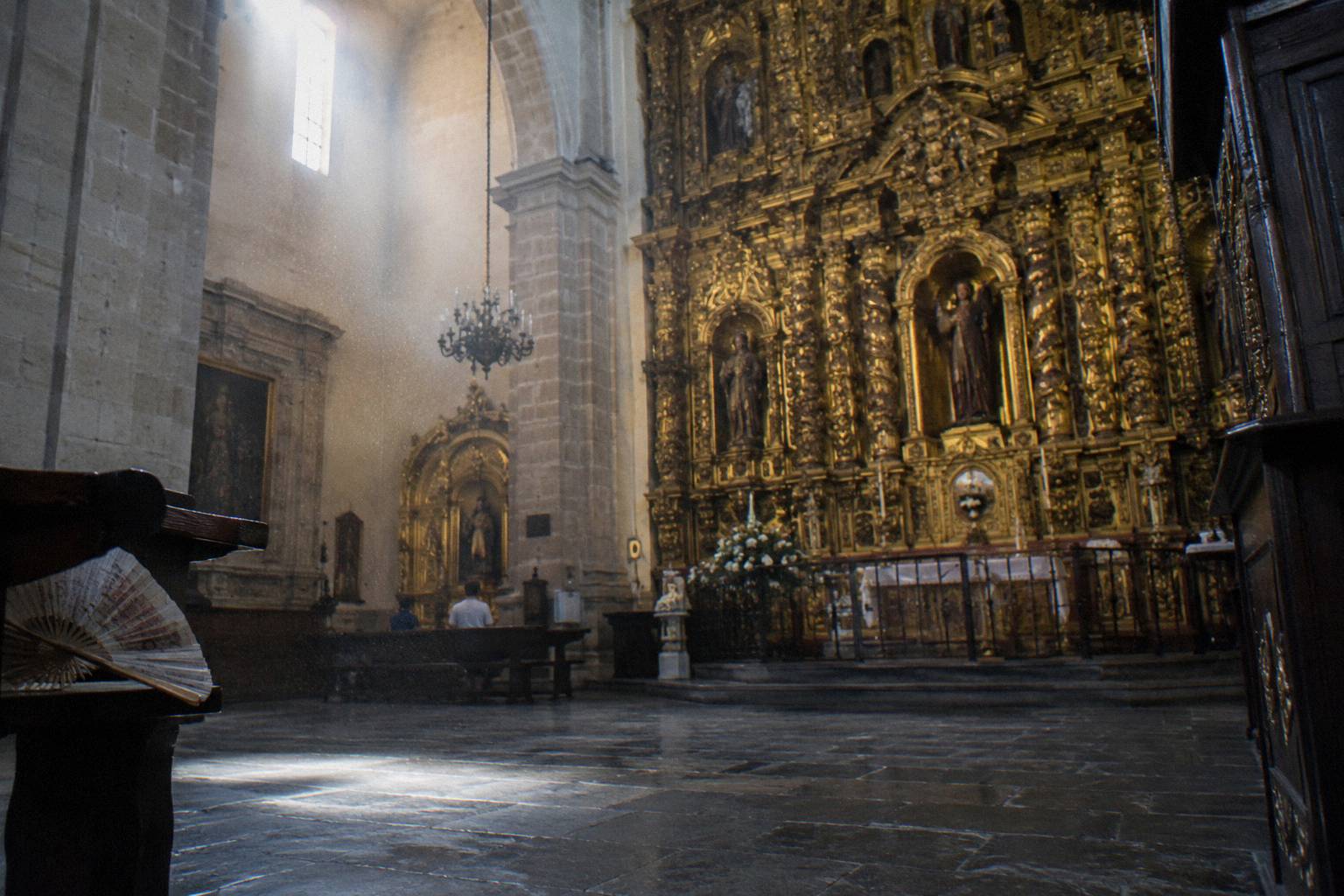
The respect point deserves spelling out because it is the one thing that can go wrong. The vigils in the panteones are families sitting with their dead, in the open, through the night in many cases. Photography at close range, posing, and loud conversation are intrusions into a private grief held in a public place. The workable rule is the one that applies anywhere: follow the family's lead, stay back unless invited closer, and let the scene be theirs. Street altars in shop doorways and municipal altars in the Zócalo are more public-facing and easier to view at leisure.
The free-versus-paid split matters because two of the city's headline buildings sit side by side and are easily confused. Entering the Templo de Santo Domingo de Guzmán is free; the Museo de las Culturas de Oaxaca, in the ex-convent attached to it, is a ticketed INAH museum at 210 MXN for foreign adults, 105 MXN for Mexican nationals. INAH also runs a Sunday free-entry rule, but only for Mexican nationals and foreign residents of Mexico with ID, not for visitors from abroad. So a foreign visitor planning a Sunday around the assumption of free museum entry will be disappointed, and should budget the ticket instead. The Jardín Etnobotánico behind the complex is a separate case again: guided visit only, no self-guided entry, free per the state government.
Monte Albán appears here only for contrast, since entry to the site is paid. It is a ticketed INAH archaeological zone outside the city, 210 MXN for foreign adults, open every day 08:00 to 17:00 with last access at 16:00, and it has nothing to do with the festival program. Visitors sometimes assume the ruins are part of the Día de Muertos experience and pad their plans accordingly. They are a separate day trip with a separate budget, and the festival itself needs none of it.
A practical packing of the days looks like this, using only the facts above:
| What | Status | Condition |
|---|---|---|
| Public cemeteries and street altars | Open without tickets | Family vigils, behave as a guest |
| Zócalo and Alameda de León | Free | Public squares, no ticket |
| Templo de Santo Domingo de Guzmán | Free | Public church, hours follow services |
| Museo de las Culturas de Oaxaca | Paid | 210 MXN foreign adults, 105 MXN Mexican nationals |
| Monte Albán | Paid, outside the city | 210 MXN foreign adults, daily 08:00-17:00 |
| Free walking tours | Free, pay what you want | Reserved on GuruWalk |
How Does A Free Walking Tour Fit In?
A free walking tour fits in as the explainer layer on top of a festival you can already see for free, adding context, background, and stories to whatever is unfolding around you. It doesn't replace the experience of wandering on your own at no cost; it interprets it, turning what you see into something you actually understand. The altars, the sand tapestures on the cemetery paths, the marigold petals laid in patterns, all of it carries meaning that is not self-evident, and a guide standing beside the thing itself, describing the logic, converts a walk past decorations into an understanding of an observance. Every walk on this site is free, pay what you want, reserved on GuruWalk, and none of them charges an entry figure of any kind.
“We had a wonderful time exploring Oaxaca with Abel today! He shared so much about the city’s history, traditions, and local culture, along with some great tips. The tour was both interesting and fun. Highly recommend!”
Ekaterina, GuruWalk review of Professional Guide By Free Tour Europe
The economics are the part visitors ask about most, and the answer is short. These are pay what you want walks: no price is published, no amount is a stated norm, and the reader decides what a walk was worth after taking it. There is no minimum and no mandatory contribution of any kind. Every GuruWalk walk is free, pay what you want, so no figure exists. What is reserved in advance is the place on the walk, on its GuruWalk page, and the deciding-about-money happens at the end, privately.
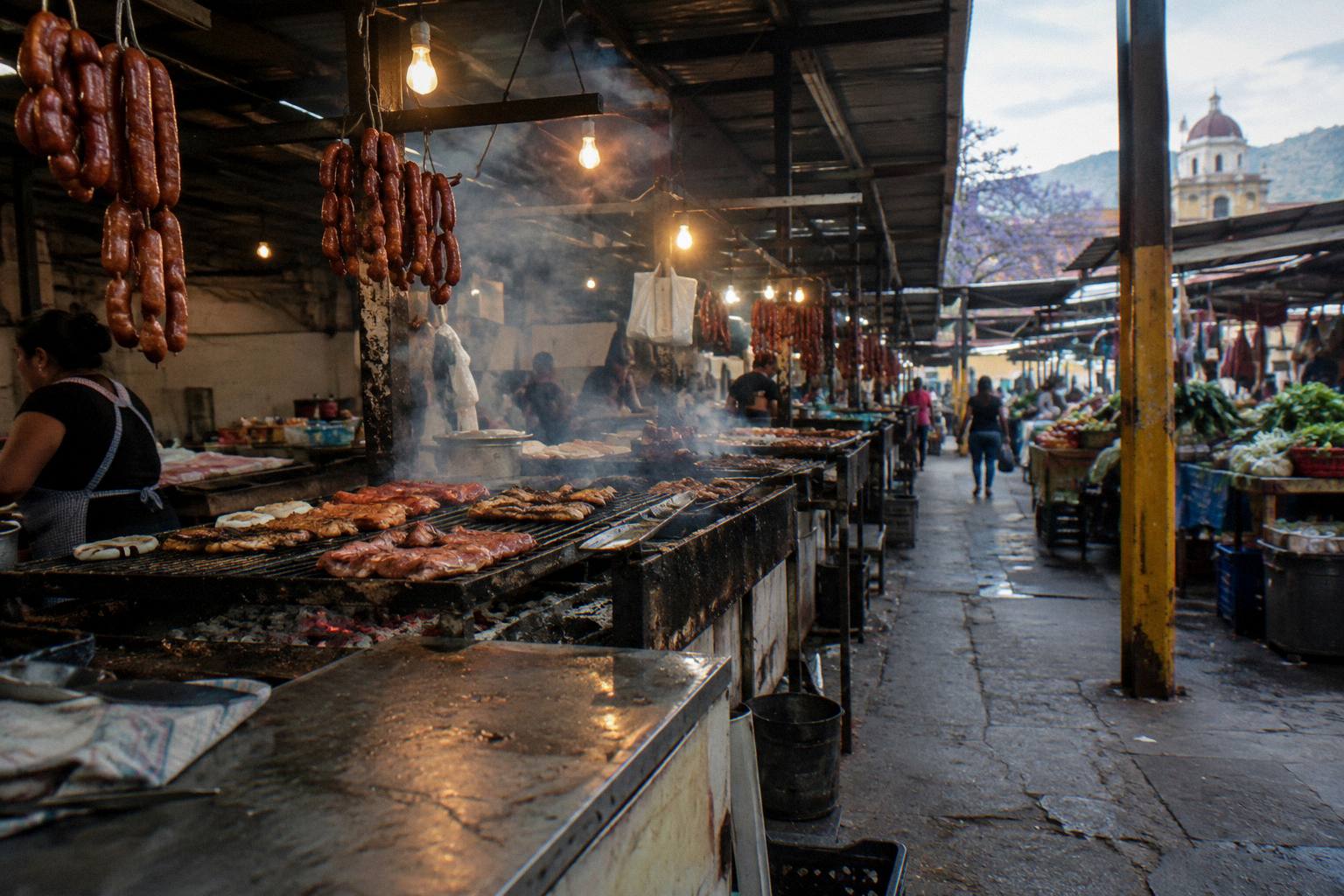
For the festival specifically, a walk serves two functions. The first is interpretive: a guide who can explain why a particular candle count, a particular bread, a particular photograph placement matters is doing something no plaque or article does as well. The second is geographic: the festival spreads across neighborhoods a first-time visitor would not naturally find, and a walk whose meeting point and neighborhood are stated up front gives the evening a spine. The category names used here are the walks' own: Centro Histórico And Santo Domingo, Jalatlaco And The Street Murals, and Xochimilco And The Markets.
The walk this article pairs with is the one titled Oaxaca Free Walking Tour, History, Culture & Local Secrets, run on GuruWalk, meeting at Teatro Macedonio Alcalá, 2 hours 30 minutes, in English, rated 4.59 out of 5 across 99 GuruWalk reviews. It is a Centro Histórico walk, and the festival's center of gravity is the centro histórico, which is the fit. No route is laid out beyond that, and none is needed: the meeting point, the neighborhood, the language and the duration are the decision facts.
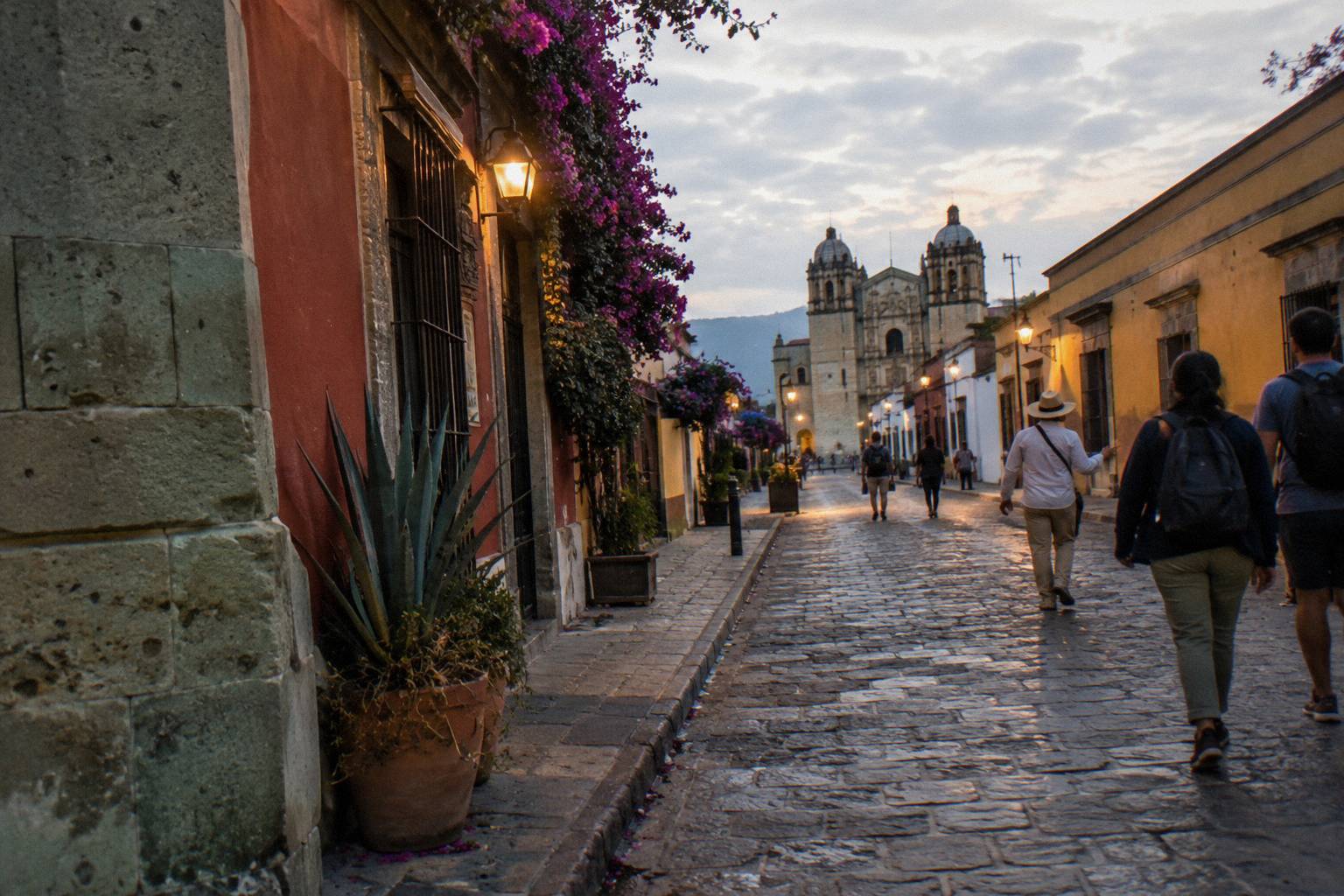
A second use of a free walk during the festival is practical rather than thematic. The streets are busy, the evenings are long, and a reserved place on a walk with a stated meeting point and a stated duration gives the night a fixed point around which everything else can flex. Visitors who prefer to drift can drift afterward; the walk is the anchor, not the itinerary. Both approaches work, and both cost nothing beyond what the walker chooses to give.
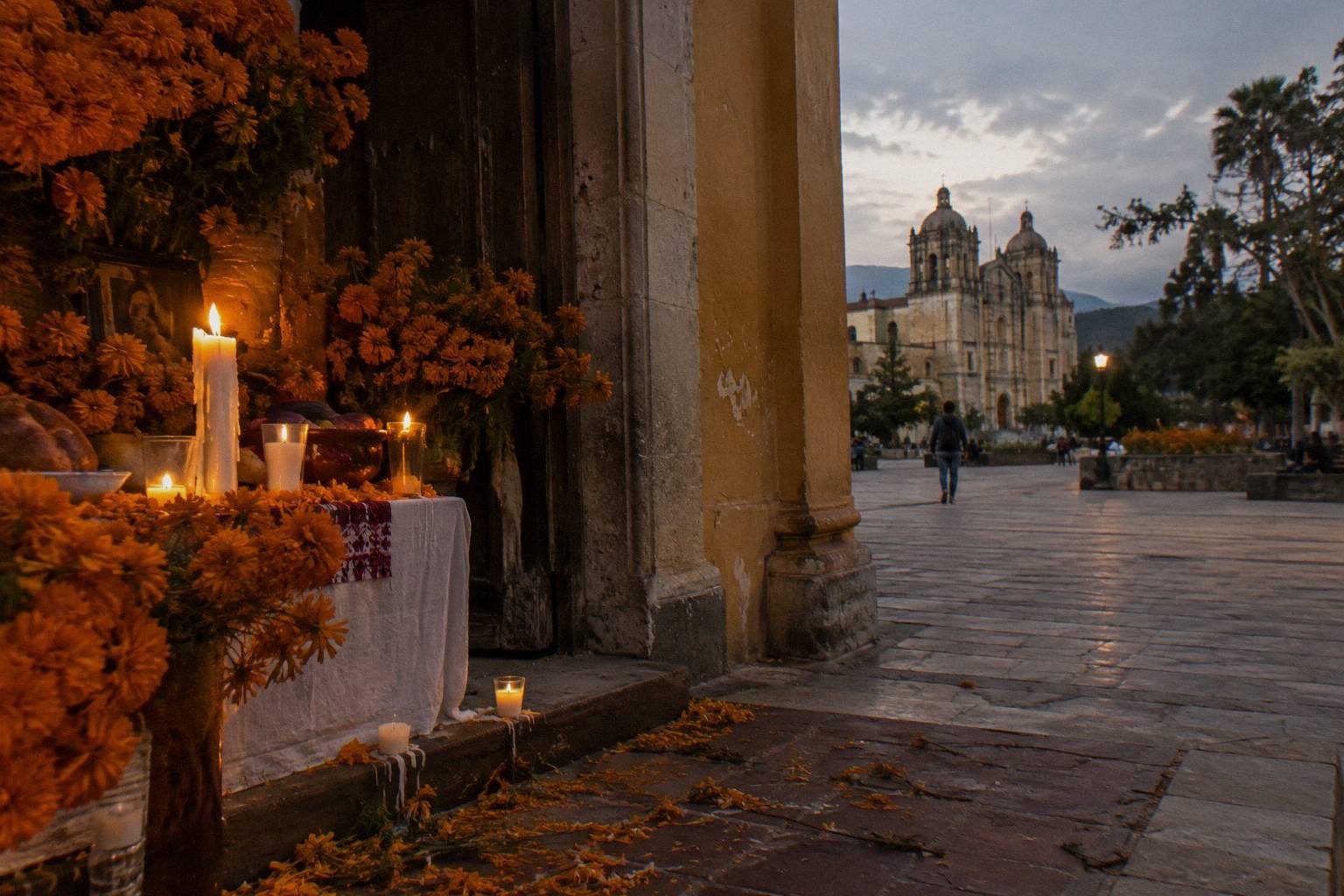
Where Do Free Walking Tours Meet Nearby?
The free walking tours here meet at fixed central points: Cosijoeza 110A in the Centro, the Plaza de la Cruz de Piedra in Xochimilco, Jardín El Pañuelito, the Museo de los Pintores Oaxaqueños, Teatro Macedonio Alcalá, and ARIPO beside the fountain. Each meeting point sits in or beside the neighborhoods where the festival happens, so the meeting point doubles as an evening's starting geography. All are free, pay what you want, reserved on GuruWalk.
“Very informative tour, even for people who have been to Oaxaca before. I especially appreciated that the guide gathered the whole group together at each stop and then talked, so everyone could hear.”
Karen, GuruWalk review of Centro And Santo Domingo Route
The centro histórico walks cluster around the festival's core. The Free Walking Tour Oaxaca by locals walk meets at Cosijoeza 110A, Centro, runs 2 hours in English and Spanish, and is rated 4.63 out of 5 across 1,165 GuruWalk reviews, the largest review pool of any walk on this site. The same Cosijoeza 110A address also serves the Jalatlaco street art walk, which is worth knowing if plans change late. Both are free, pay what you want, and neither carries any extra-cost flag.
“We had an extensive tour of Oxchimlico with Julio. He was pleasant, very informative and his English is excellent. His knowledge goes far beyond Oxchimlico to art, culture and the full history of Oaxaca and its history.”
Jean, GuruWalk review of Aztec Roots And Chocolate
The Xochimilco and markets category meets differently. The Around Oaxaca city walk meets at the Plaza de la Cruz de Piedra in Xochimilco, 2 hours 30 minutes, English and Spanish, rated 4.99 out of 5 across 496 GuruWalk reviews. The Markets, History And Art walk meets at Café Kapel Nana and Eden MiniGalería, lasts 2 hours, runs in English and Spanish, and is rated 5 out of 5 across 28 GuruWalk reviews. There is also a page here for the Aztec Roots And Chocolate walk from the same plaza, meeting at Plaza de la Cruz de Piedra, 2 hours, English and Spanish, rated 4.78 out of 5 across 23 GuruWalk reviews.
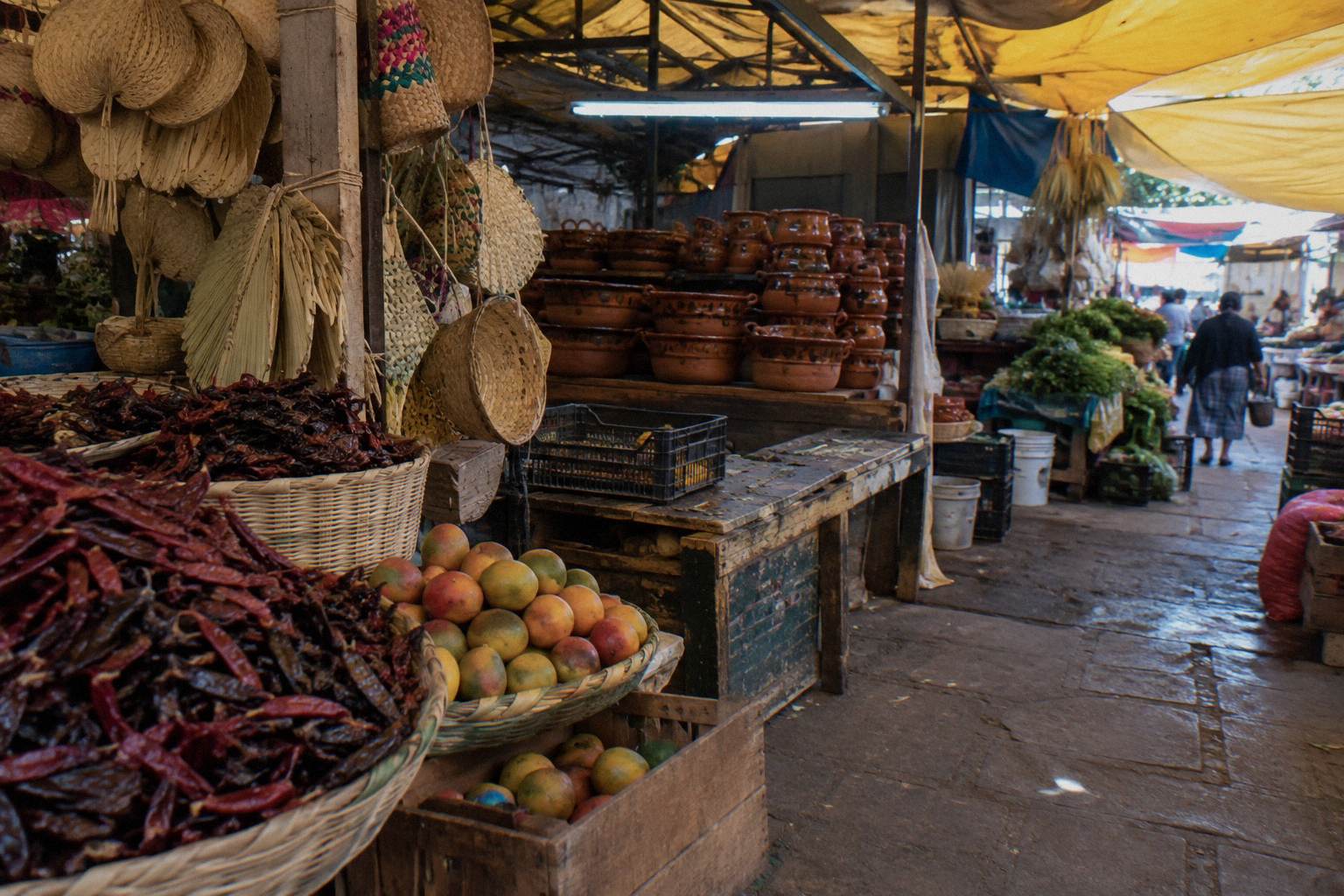
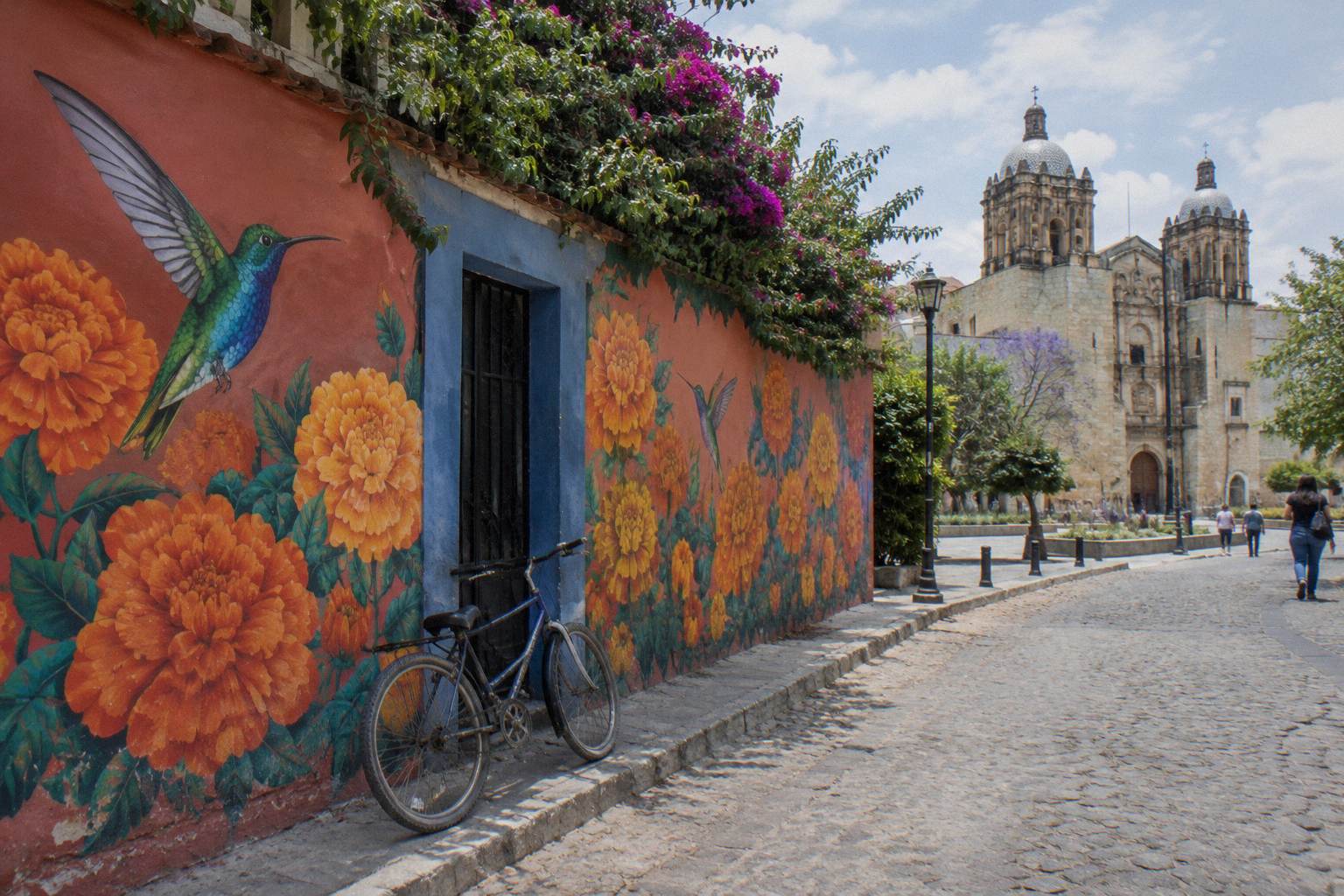
Jalatlaco is the third meeting geography. The Jalatlaco street art walk, in English only, 2 hours, rated 4.91 out of 5 across 636 GuruWalk reviews, meets back at Cosijoeza 110A in the Centro despite being a Jalatlaco walk. The Jalatlaco Murals And Art Workshops walk, 2 hours, English and Spanish, rated 4.93 out of 5 across 96 GuruWalk reviews, meets at the Iglesia de San Matías Jalatlaco, inside the neighborhood itself. During the festival, Jalatlaco's church square carries its own altars, which makes a meeting point at the church a natural one for the evening.
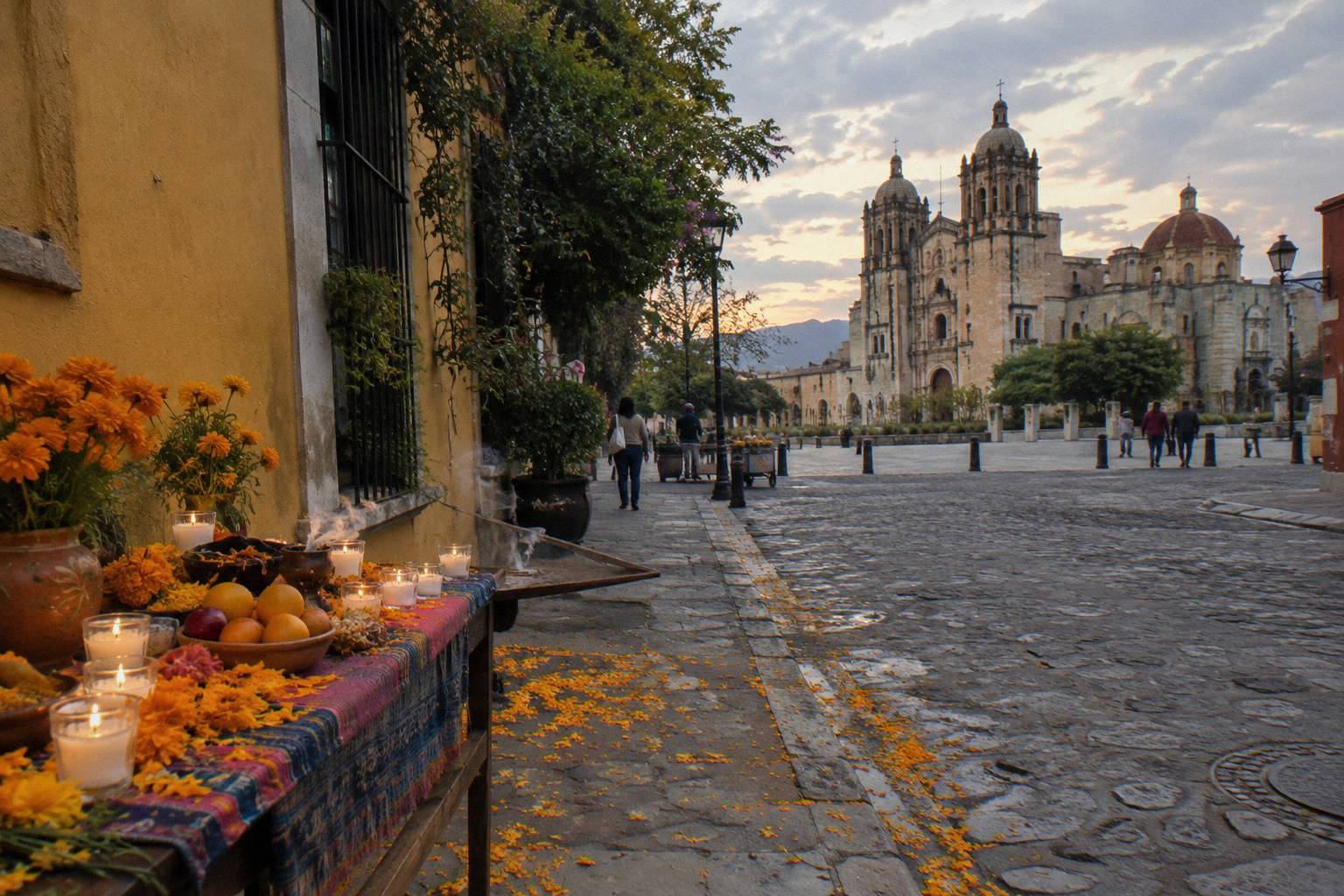
To choose among them, go by facts rather than adjectives:
| Walk | Meets at | Duration | Language | Rating |
|---|---|---|---|---|
| Centro And Santo Domingo Route | Cosijoeza 110A, Centro | 2 hours | English and Spanish | 4.63 out of 5, 1,165 reviews |
| Local Secrets From Macedonio Alcalá | Teatro Macedonio Alcalá | 2 hours 30 minutes | English | 4.59 out of 5, 99 reviews |
| Xochimilco Start, Through Time | Plaza de la Cruz de Piedra, Xochimilco | 2 hours 30 minutes | English and Spanish | 4.99 out of 5, 496 reviews |
| Street Art Of Jalatlaco | Cosijoeza 110A, Centro | 2 hours | English | 4.91 out of 5, 636 reviews |
| Markets, History And Art Walk | Café Kapel Nana and Eden MiniGalería | 2 hours | English and Spanish | 5 out of 5, 28 reviews |
Mistakes That Trip People Up At Día De Muertos
The mistakes that cost money or goodwill are few and specific: treating the cemeteries as a show, assuming Santo Domingo's museum inherits the church's free entry, counting on INAH Sunday free entry as a foreign visitor, and padding the festival with paid ruins it does not need. Each of these comes from a real misunderstanding of how the free and paid layers sit beside each other, and each is avoidable with one sentence of fact.
The first mistake is behavioral. The panteones are open without tickets because they are family vigils held in public, and the openness ends the moment enough visitors treat it as performance. Keep distance, follow each family's lead, and treat photography the way you would at any private ceremony you were permitted to attend. The second mistake is structural: entering the Templo de Santo Domingo de Guzmán is free, and a visitor who assumes the whole complex follows that rule walks into the Museo de las Culturas de Oaxaca expecting the same. It is a ticketed INAH museum, 210 MXN for foreign adults, and INAH's Sunday free entry applies to Mexican nationals and foreign residents of Mexico with ID only.
The third mistake is planning Monte Albán into the festival as though it were part of it. Monte Albán is a ticketed site outside the city, 210 MXN for foreign adults, and nothing in the Día de Muertos program depends on it. Visitors who want the ruins should give them their own day and their own budget. The fourth is walking past the free layer entirely: the Zócalo and Alameda de León, the Andador Macedonio Alcalá, the open churches, the markets where walking in is free and food and goods are paid, all of it is the festival's actual stage, and it costs nothing to enter.
The fifth is assuming a guide is needed to gain access. Nothing about the festival is gated, and a free walking tour is an explanation, not a ticket. Its value is interpretive, and for many visitors that value is high, but everything the festival shows can be seen for free, and the walk on Free Things To Do In Oaxaca you choose to join is the layer you add by choice, on GuruWalk, at no fixed price.
Common Questions
Can Tourists Celebrate Day Of The Dead In Oaxaca?
Yes. The cemeteries and street altars are open without tickets, the Zócalo and Alameda de León are public squares, and entering the Templo de Santo Domingo de Guzmán is free. Visitors take part as respectful guests at family observances held in public, which is the form the festival itself takes.
Do You Need Tickets For Any Day Of The Dead Events?
The public panteones and street altars are open without tickets. No price is published for anything in the street program. The paid items sit beside the festival: the Museo de las Culturas de Oaxaca at 210 MXN for foreign adults, and sites outside the city such as Monte Albán, also 210 MXN.
Is The Santo Domingo Complex Free During The Festival?
Entering the church is free. The Museo de las Culturas de Oaxaca in the ex-convent beside it is a ticketed INAH museum, 210 MXN for foreign adults and 105 MXN for Mexican nationals. The Jardín Etnobotánico behind it is guided visit only, no self-guided entry, free per the state government.
Can A Free Walking Tour Cover The Festival?
The walks here are neighborhood walks, in the centro histórico, Xochimilco and the markets, and Jalatlaco and the street murals, all of them free, pay what you want, reserved on GuruWalk. They explain the context of what the festival puts in the street. Each walk shares its meeting point and neighborhood in advance rather than a full route.
Is INAH Sunday Free Entry Available To Foreign Visitors?
No. INAH's Sunday free entry applies to Mexican nationals and foreign residents of Mexico with ID only. Visitors from abroad pay the standard ticket at INAH sites and museums, including the Museo de las Culturas de Oaxaca and, outside the city, Monte Albán.
How Much Should You Pay For A Free Walking Tour?
No amount is published, and no norm is stated. Every walk is free, pay what you want, and the reader decides after the walk. As a plain fact about prices elsewhere in the city, 210 MXN is the price of a foreign adult ticket at Monte Albán, stated for comparison only, not as a suggested figure.