Oaxaca Markets On A Free Walking Tour: What To Know Before You Go
The Oaxaca markets are free to walk into and cost only what you choose to eat or buy. Here is what is free, what is paid, when each market is at its best, and where the free walking tours meet near them.
In Short
Walking into every Oaxaca market in this guide is free: Mercado 20 de Noviembre, Mercado Benito Juárez, Mercado de Abastos and the Tlacolula Sunday Market. Food, crafts and goods inside are paid. Of the 10 free walking tours in Oaxaca, several meet at or beside these markets, including a markets walk rated 5 out of 5 across 28 GuruWalk reviews.
The markets are the part of Oaxaca that costs nothing to enter and gives the most back. Every covered hall and open-air tianguis in this guide is free to walk into, and all 10 free walking tours in this city are free too, pay what you want, reserved on GuruWalk. This guide lines the two up: which markets sit within reach of the center, what is free and what is paid inside them, when to go, and where the free walking tours meet nearby. Part of the Free Things To Do In Oaxaca guides series.
Quick Facts
Question
Answer
Is it free to enter the markets?
Yes. Walking into Mercado 20 de Noviembre, Mercado Benito Juárez, Mercado de Abastos and the Tlacolula Sunday Market is free.
What costs money inside?
All food and goods. Nothing on the stalls is free.
Which markets are in the city center?
Mercado 20 de Noviembre and Mercado Benito Juárez.
When does Tlacolula run?
Sunday only.
Which free walking tour is market-focused?
Oaxaca City Walking Tour: Markets, History and Art, rated 5 out of 5 across 28 GuruWalk reviews, 2 hours, English and Spanish.
Is a market walk itself free?
Yes. Every walk on this site is free, pay what you want.
Which Markets Are Walkable From The Center?
The two covered markets of the historic center, Mercado 20 de Noviembre and Mercado Benito Juárez, sit side by side within the Centro Histórico, free to walk into from the Zócalo and the Alameda de León. Mercado de Abastos lies further out and is the city's wholesale market. The Tlacolula Sunday Market is outside the city altogether, in the town of Tlacolula, and is not a walk from the center.
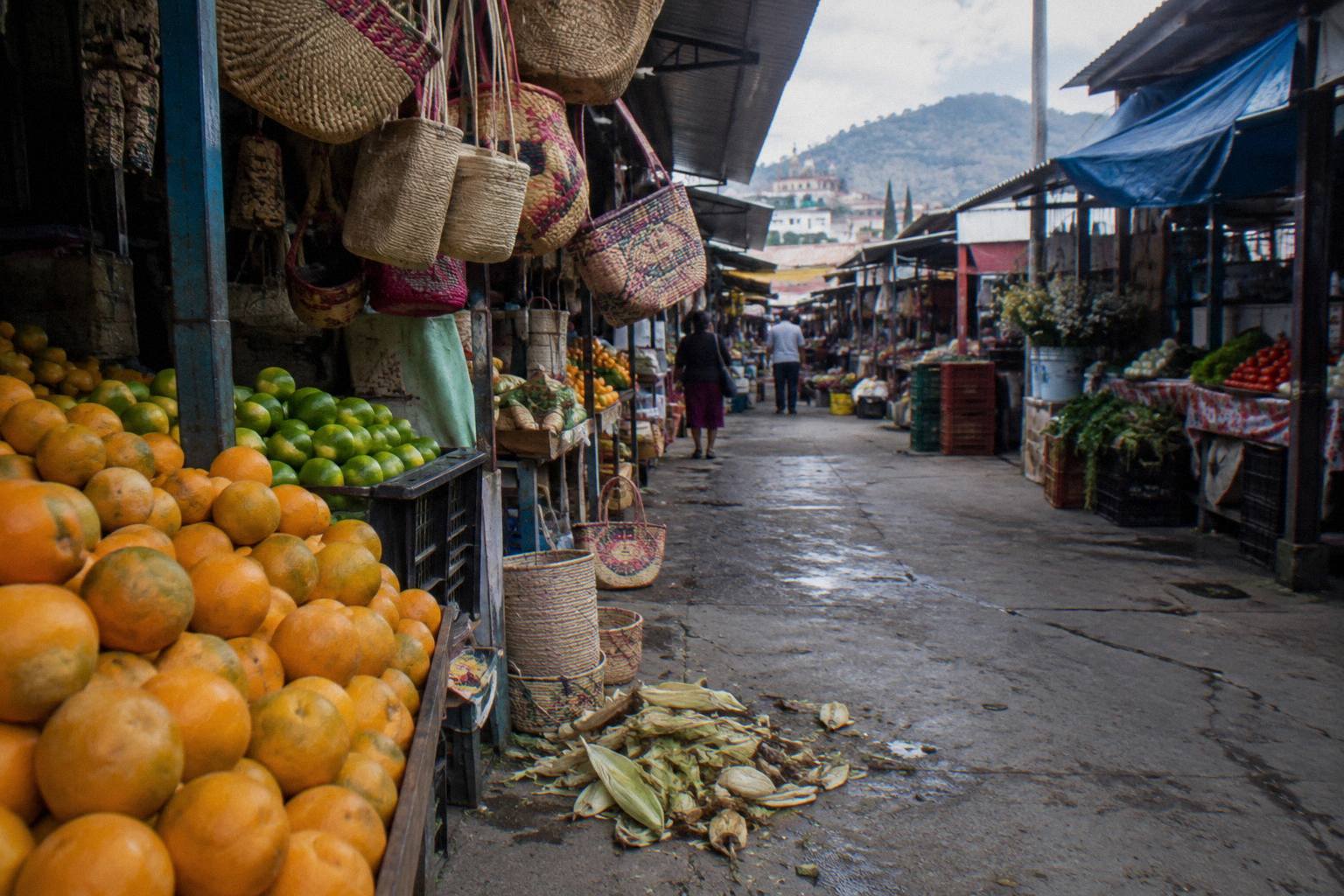
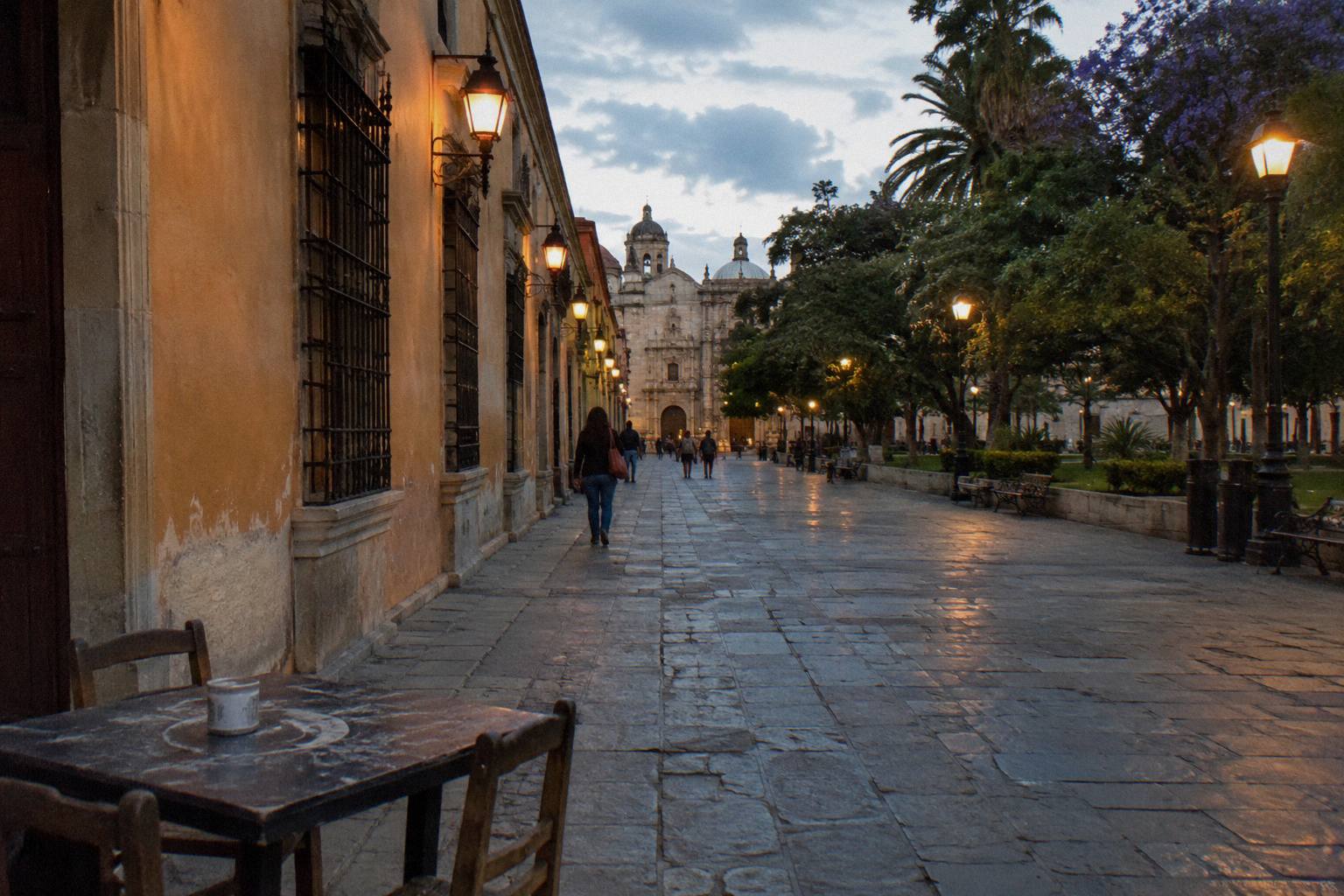
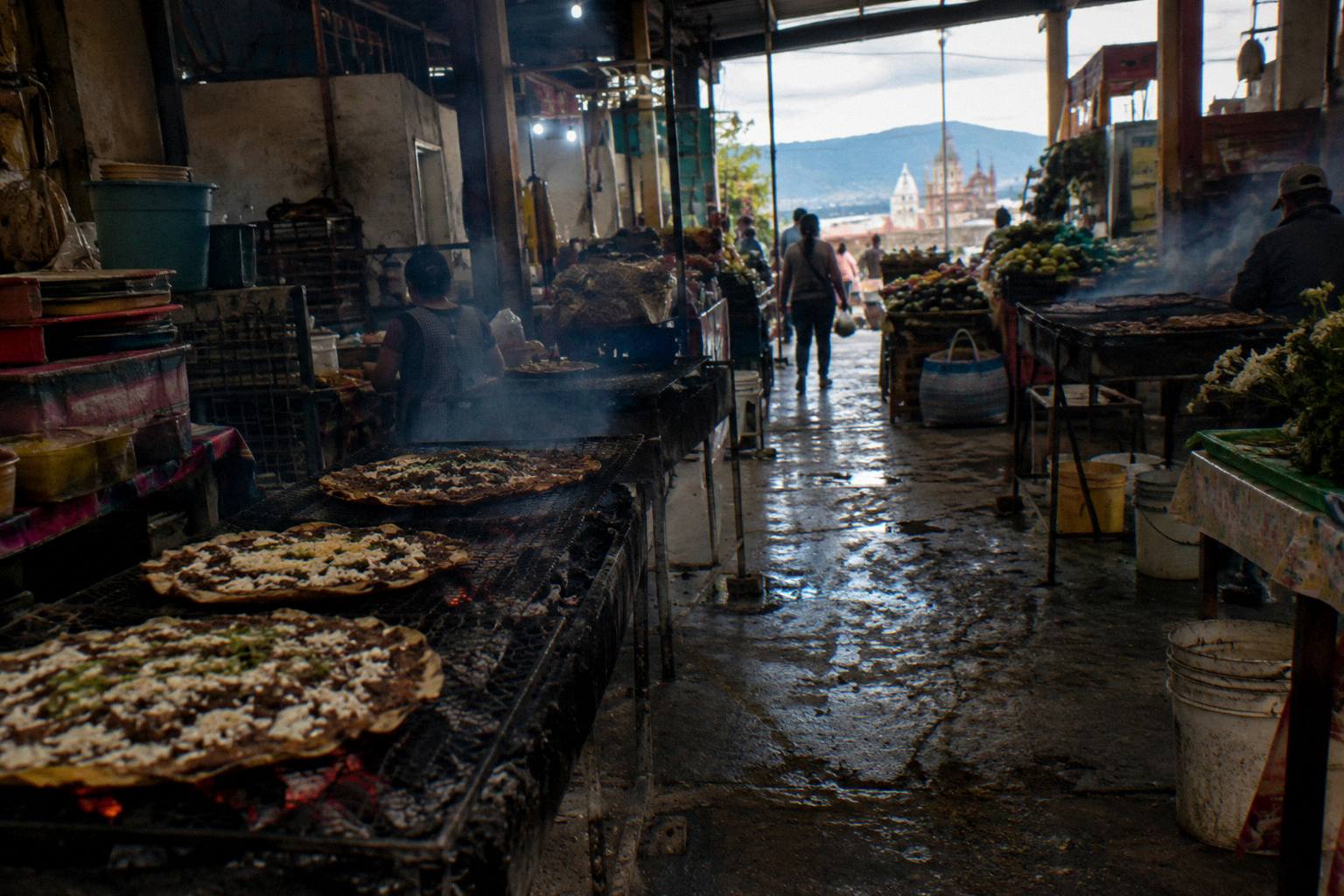
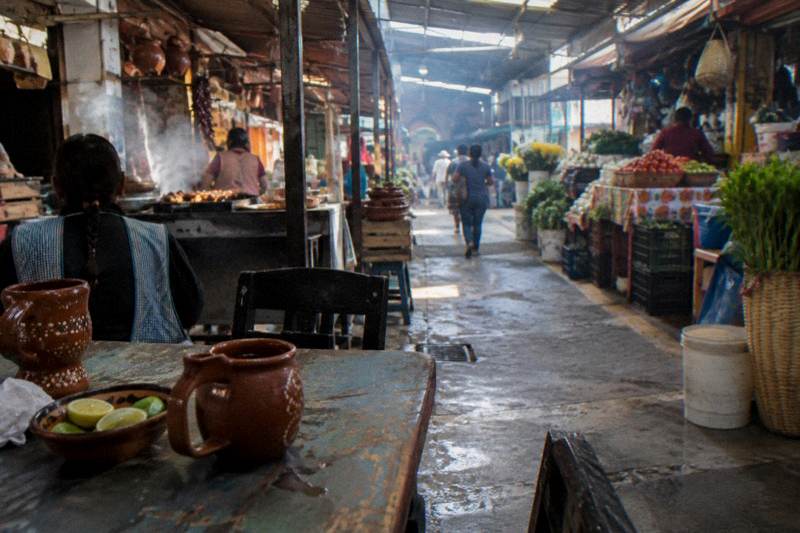
Mercado 20 de Noviembre and Mercado Benito Juárez are the pair most visitors mean when they say "the Oaxaca markets." Both are covered public markets. Walking in costs nothing at either; you pay only for what you buy, and the food stalls of 20 de Noviembre, including the smoke-filled passageway known for grilled meats, are the reason many people go. The Zócalo and the Alameda de León, themselves public squares with no ticket, sit close by, so a loop of square plus markets plus the Andador Macedonio Alcalá costs nothing but lunch.
Market
Where It Is
Entry
When It Runs
Mercado 20 de Noviembre
Centro Histórico
Free to walk in
Everyday covered market
Mercado Benito Juárez
Centro Histórico
Free to walk in
Everyday covered market
Mercado de Abastos
Outside the center
Free to walk in
Busiest Saturday
Tlacolula Sunday Market
Town of Tlacolula, outside the city
Free to walk in
Sunday only
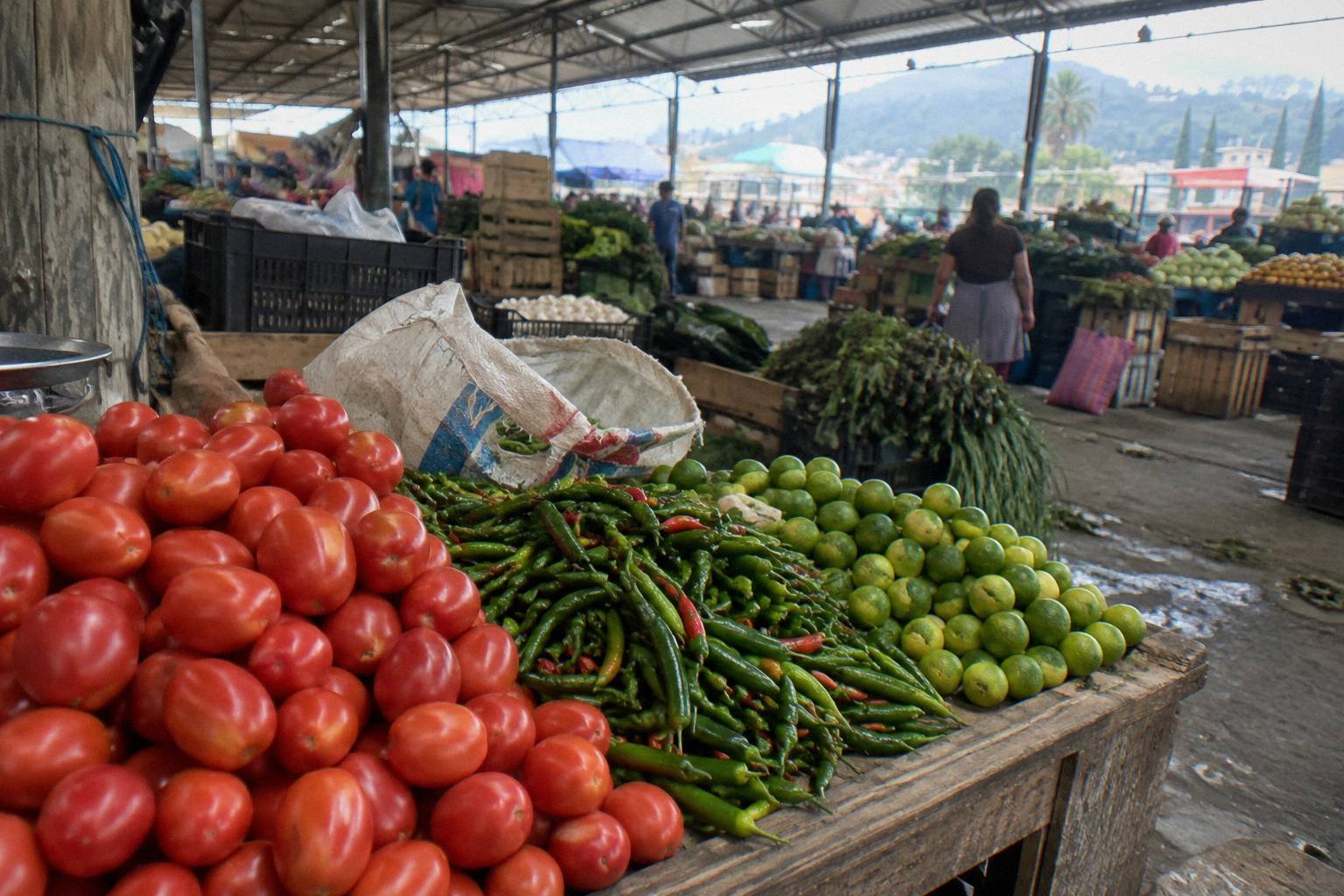
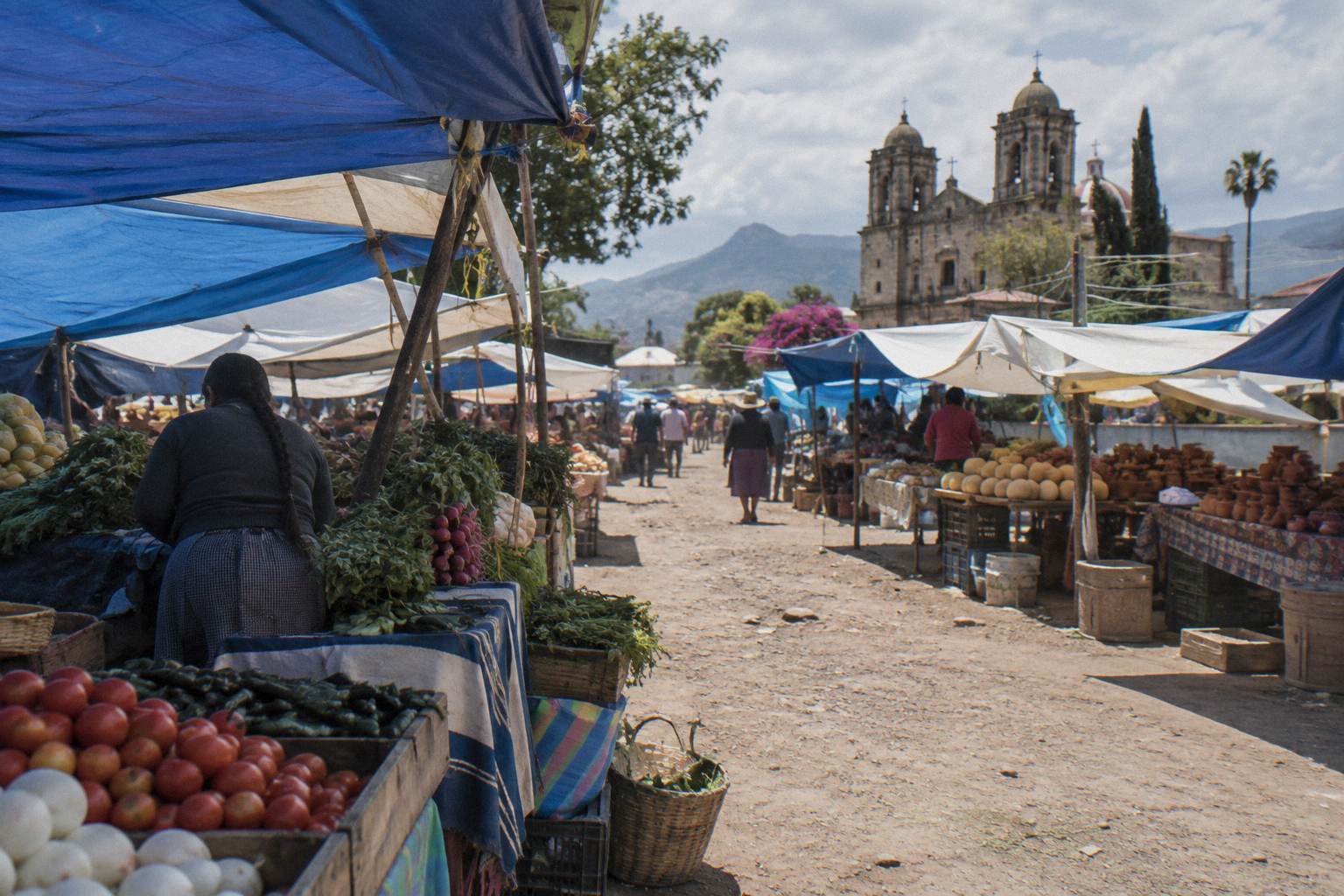
The contrasts matter for planning. Abastos is a very large wholesale market, at its busiest on Saturday, still free to enter, but a different animal from the tidy center halls: it is where the city's restaurants and rebozo vendors do their buying. Tlacolula belongs to the valley towns rather than the city, alongside Monte Albán, Mitla, Yagul, Hierve el Agua and El Tule, all of which lie outside Oaxaca and none of which is a walk from the Zócalo. A Sunday in Tlacolula pairs naturally with valley sightseeing, and the market itself charges no entry.
What this means for a walking plan is simple: everything in the center clusters together, everything in the valley clusters together, and mixing them on foot does not work. The center pair can fill a morning between other free sights. If your market day is Sunday and you want Tlacolula, that is a valley day, and the valley's paid entries are a separate question, covered below. For more on pairing the center halls with the evening scene, see the Zócalo after dark and free evening walking tours guide.
A note on how the center pair differ from each other, because choosing between them saves time. Benito Juárez is the one most described as the general hall: produce, cheeses, bread, crafts and household goods under one roof, the sort of place where a fruit stall, a basket seller and a chocolate mill sit in the same aisle. 20 de Noviembre is the food market, the one with the smoke alley, the cooked-meal counters and the tlayudas. Both are free to enter, both are covered, and walking between them takes moments. Doing both in one morning is normal, and it costs nothing until you order food or buy something to carry home.
What Is Free And What Costs Money?
Entry to every market in this guide is free. Everything inside is paid: food, drink, crafts, textiles and household goods. Beyond the markets, two popular valley stops are commonly mistaken for free and are not: Hierve el Agua is community-run and charged, 70 MXN total as two community fees, and getting close to the Árbol del Tule in its churchyard needs a small per-person fee of about 20 MXN.
Inside the markets the split is clean and worth repeating because it trips people up: walking in, browsing, photographing the aisles and soaking up the noise cost nothing; the moment you want a tlayuda, a mole paste, a bag of chapulines or a woven basket, you are buying at a stall price. There is no market admission, no market tour fee and no obligation to purchase. The smoke alley of Mercado 20 de Noviembre is a corridor of food counters, not a ticketed attraction. If you want a fuller picture of eating your way through, the Oaxaca street food on a free walking tour guide walks the same halls.
“It was wonderful to hear about the history of the neighborhood and the prominent muralists. It was a very pleasant walk and the guide was excellent in explaining and answering our questions. I would recommend it.”
Outside the city, the paid parts arrive quickly. Hierve el Agua is not an INAH site; it is run by the communities around it, and entry is charged by two of them, 70 MXN in total, made up of a 20 MXN road toll and a 50 MXN park access fee. The Árbol del Tule, the great tree in the Santa María del Tule churchyard, needs a small per-person fee of about 20 MXN to get close. Neither is a market, but both appear on the same Sunday itineraries as Tlacolula, so budget them together. The archaeological zones of Monte Albán, Mitla and Yagul are also ticketed, 210 MXN for foreign adults at each, and INAH's Sunday free entry applies only to Mexican nationals and residents of Mexico with ID, never to visitors from abroad, per the INAH pages for each site.
Stop
Status
What You Pay As A Foreign Visitor
All four markets
Free entry
Nothing to walk in; food and goods at stall prices
Hierve el Agua
Community-charged
70 MXN total, a 20 MXN road toll plus 50 MXN park access
Árbol del Tule churchyard
Community-charged
About 20 MXN per person to get close
Monte Albán, Mitla, Yagul
Ticketed INAH sites
210 MXN foreign adults; Sunday free entry is for Mexican nationals and residents only
Museo de las Culturas de Oaxaca
Ticketed INAH museum
210 MXN foreign adults
Museo de Sitio Casa Juárez
Ticketed INAH museum
145 MXN foreign adults
All four markets cost nothing to enter; the valley stops of Hierve el Agua and the Árbol del Tule carry small community fees.
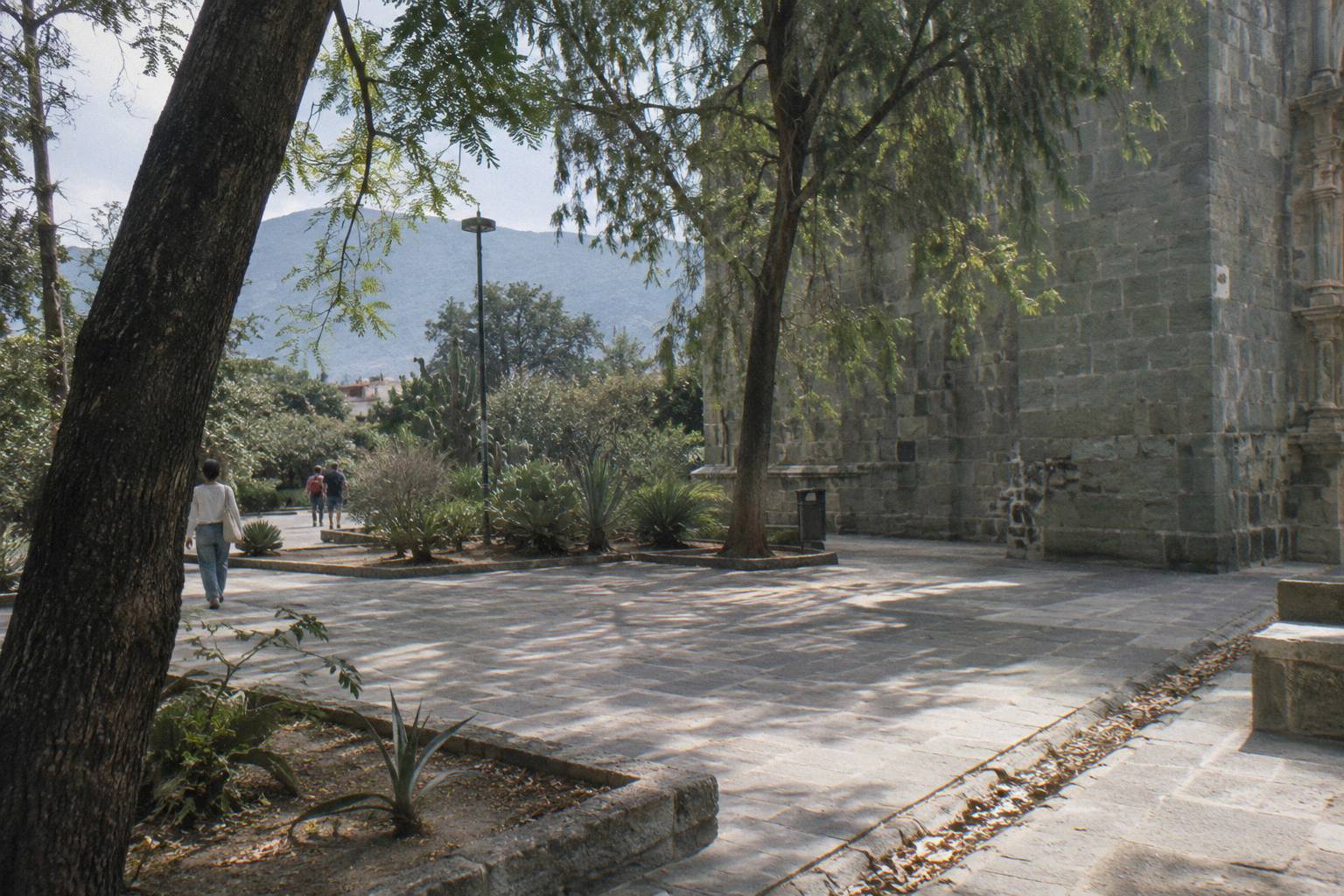
The free column is longer than people expect, though. The Zócalo, the Alameda de León and the Andador Macedonio Alcalá are open public space. The Templo de Santo Domingo de Guzmán is free to enter as a public church, while the Museo de las Culturas de Oaxaca in the ex-convent beside it is ticketed at 210 MXN for foreign adults; a museum never inherits the church's free status. The Jardín Etnobotánico behind it is guided-visit only, no self-guided entry, with guided visits free per the Oaxaca state government. Put simply: the market day itself can be a zero-peso day if you eat nothing, and a modest one if you do.
It helps to hold one principle through all of this: a free base and a paid part are never the same fact. The church is free and the museum beside it is not. The hill park is free and the auditorium's lower sections are not. The market entry is free and the food is not. Most mix-ups come from merging those pairs together, so check which half charges and which half does not. When a blog or a flyer tells you a valley Sunday is free, check which single part of it they mean, because there is always a paid part sitting next to the free one, and it is usually the part you actually came for.
Museo de las Culturas de OaxacaPaid
Ticketed INAH museum in the Santo Domingo ex-convent.
When Is The Best Time To Go?
Tlacolula runs only on Sunday, and Mercado de Abastos is at its busiest on Saturday, so the calendar picks those two for you. The center pair, Mercado 20 de Noviembre and Mercado Benito Juárez, run as everyday covered markets. Only Tlacolula has a fixed day; the others are about which day suits you, not which day they open.
Sunday is the valley's day, and the Tlacolula Sunday Market is the reason: a weekly open-air market in a valley town, free to walk into, with food and goods paid. If your trip includes Hierve el Agua and El Tule, Sunday is the natural day to combine all three, and the community fees at the first two stops are small, fixed amounts rather than surprises. What Sunday is not, for visitors from abroad, is a free-entry day at the INAH sites: the Sunday free entry at Monte Albán, Mitla and Yagul is for Mexican nationals and residents of Mexico with ID only.
Saturday belongs to Abastos. The wholesale market is busiest that day, and that busyness is the spectacle: it is free to enter and enormous. The center halls are the flexible ones; they are permanent markets, not events, so they fit any day and any weather, which matters in a city where the rainy months can decide your afternoon. A reasonable rhythm is the center pair on a weekday morning, Abastos on Saturday if the scale appeals, Tlacolula on Sunday with the valley. If a whole day or several is what you are planning, the three-day Oaxaca itinerary built around free walking tours puts the markets in sequence with everything else that costs nothing.
The Guelaguetza festival, usually the last two Mondays of July, reshapes the whole city, and the free-tour and market plan changes with it: the Auditorio Guelaguetza on Cerro del Fortín has free upper sections, C and D, first come and unreserved, while sections A and B are ticketed, sold only through the official online channel. Cerro del Fortín itself is a free hill park. None of that changes market entry, but it changes crowds. More on that in the Guelaguetza free events and walking tours guide.
Cerro del FortínFree
Hill park above the city, open to the public.
Day of Muertos brings its own free layer: the public panteones and street altars are open without tickets, as families' own vigils, and the markets hum around them. Nothing is charged to walk among the altars, and the market halls stay free to enter, with the usual rule that everything on a stall is paid. The Oaxaca Day of the Dead free events guide covers that week in detail.
Andador Macedonio AlcaláFree
Pedestrian street, no ticket.
Where Do Free Walking Tours Meet Nearby?
The 10 free walking tours in Oaxaca all meet at fixed points around the center and the Xochimilco district, each free, pay what you want, each reserved on GuruWalk. The market-focused walk, Oaxaca City Walking Tour: Markets, History and Art, meets at Café Kapel Nana and Eden MiniGalería, runs 2 hours in English and Spanish, and is rated 5 out of 5 across 28 GuruWalk reviews.
The markets walk is the obvious pairing with this guide. Its category is Xochimilco And The Markets, its meeting point is Café Kapel Nana and Eden MiniGalería, and it runs 2 hours in English and Spanish. No operator name is printed on its GuruWalk page, so none is given here. Its review pool is small, 28 reviews, and the 5 out of 5 rating should be read with that count beside it, which is why this article prints both. To judge the format rather than one walk, the free versus paid walking tours comparison sets out the differences.
From there, the center walks cluster near the markets' front door. The Free Walking Tour Oaxaca by locals, run by Oaxaca by locals, rated 4.63 out of 5 across 1,165 GuruWalk reviews, meets at Cosijoeza 110A, Centro and runs 2 hours in English and Spanish. The Jalatlaco street art tour, also by Oaxaca by locals, rated 4.91 out of 5 across 636 reviews, meets at that same Cosijoeza 110A address and runs 2 hours in English only. Both belong to the Centro Histórico and Jalatlaco categories respectively, and both put you on foot in districts that bookend the market halls.
Walk
Meets At
Duration
Languages
Rating On GuruWalk
Markets, History And Art Walk
Café Kapel Nana and Eden MiniGalería
2 hours
English and Spanish
5 out of 5 across 28 reviews
Centro And Santo Domingo Route
Cosijoeza 110A, Centro
2 hours
English and Spanish
4.63 out of 5 across 1,165 reviews
Street Art Of Jalatlaco
Cosijoeza 110A, Centro
2 hours
English
4.91 out of 5 across 636 reviews
Xochimilco Start, Through Time
Plaza de la Cruz de Piedra, Xochimilco
2 hours 30 minutes
English and Spanish
4.99 out of 5 across 496 reviews
Aztec Roots And Chocolate
Plaza de la Cruz de Piedra, Xochimilco
2 hours
English and Spanish
4.78 out of 5 across 23 reviews
On the Xochimilco side, Around Oaxaca city, a walk through Time and Culture, rated 4.99 out of 5 across 496 GuruWalk reviews, meets at Plaza de la Cruz de Piedra in Xochimilco and runs 2 hours 30 minutes in English and Spanish. Its category is Centro Histórico And Santo Domingo, though its meeting point sits in Xochimilco, the same district as the markets walk. One further Xochimilco walk, the Xochimilco Walking Tour covering Aztec roots, the colonial aqueduct and Oaxacan chocolate, also meets at Plaza de la Cruz de Piedra, runs 2 hours in English and Spanish, and is rated 4.78 out of 5 across 23 GuruWalk reviews; it has no card on this site, and its own GuruWalk page carries the details.
Meeting points appear exactly as their GuruWalk pages give them, and no route beyond those points is given for any walk. What is safe to say is the pairing logic: a morning center walk that meets near Cosijoeza 110A or Jardín El Pañuelito, then the halls on your own, or the markets walk first and the center after. If you are building more than one day around this, the itinerary guide referenced above does exactly that.
One practical note on how these walks work, because the question comes up constantly: every walk on this site is free, pay what you want, and reservations happen on GuruWalk. That single sentence is the whole mechanic. No amount is published anywhere for what anyone gives, and nothing in this article or on this site suggests one; each walker decides for themselves. This site operates nothing and runs none of these walks; every listing belongs to an independent local guide on GuruWalk, and Free Things To Do In Oaxaca simply points to them.
Mistakes That Trip People Up At The Oaxaca Markets
The recurring mistakes are all about assuming free where it does not apply: expecting INAH sites to be free on Sunday when that rule covers only Mexican nationals and residents, expecting Hierve el Agua and the Árbol del Tule to be free when both carry community fees, and treating a market's free entry as if the food were free too. None of these amounts is large, but each one surprises someone every week.
“Super interesting tour! Julio told us about many interesting murals and their stories, and took us to various art galleries with beautiful artwork. His English was perfect and he was able to answer all our questions.”
The first mistake is the Sunday rule. INAH's free Sunday entry at Monte Albán, Mitla, Yagul, the Museo de las Culturas de Oaxaca and the Museo de Sitio Casa Juárez is for Mexican nationals and residents of Mexico with ID. Visitors from abroad pay, 210 MXN at the Category I sites and 145 MXN at Casa Juárez. Plenty of itineraries circulate claiming a free Sunday of ruins; for foreign visitors that day does not exist. The markets, by contrast, really are free every day they run, which is why this guide leans on them.
The second is Hierve el Agua and El Tule. Hierve el Agua is community-run, not INAH, and two communities each charge: 70 MXN in total, a 20 MXN road toll and a 50 MXN park access fee. The Tule tree stands in a churchyard, and getting close needs about 20 MXN per person. Both appear on "free things in the valley" lists that should know better. The Tlacolula market on the same day is the genuinely free part of that Sunday. The third mistake is inside the halls: free entry is not free lunch, and the smoke alley's counters are businesses. Budget for what you eat and everything else in this guide holds at zero.
The fourth is subtler: treating every walk as interchangeable. Two walks meet at Cosijoeza 110A, Centro, but one is a 2-hour English-only Jalatlaco street art walk and the other a 2-hour English-and-Spanish center walk, and one Xochimilco walk on this site has a page but no card. Check the language, duration and meeting point of the specific walk on its own GuruWalk page before you reserve, not after. And never assume a walk covers a landmark its page does not mention; go by what the GuruWalk page states for each walk: platform, operator, meeting point, neighbourhood, duration and languages.
A fifth mistake is treating Mitla's outside-hours visits as a normal ticket. Mitla also charges 730 MXN for visits outside normal hours, a figure that catches people who arrange early or late access without reading the INAH page. The normal ticket for foreign adults is 210 MXN, and the site's hours are printed on that same page. The lesson generalizes: the printed price on the official page is the only price that counts, and any special arrangement carries its own. The same discipline applies to the markets, where each stall's own price is the only price that counts, and to the walks, where the only cost fact that exists is free, pay what you want.
Hierve el AguaPaid
Community-run site, not INAH. Entry is charged by two communities.
Common Questions About The Oaxaca Markets
Is It Free To Enter The Oaxaca Markets?
Yes. Walking into Mercado 20 de Noviembre, Mercado Benito Juárez, Mercado de Abastos and the Tlacolula Sunday Market costs nothing. Everything you buy inside, from food to crafts, is paid at the stall. There is no admission desk, ticket or minimum purchase at any of them.
Which Oaxaca Market Is Best On A Sunday?
The Tlacolula Sunday Market, which runs only on Sunday and is free to walk into. It pairs with valley stops such as Hierve el Agua and the Árbol del Tule, though both of those carry community fees. The center halls also open on Sunday if you stay in the city.
Is There A Free Walking Tour Of The Oaxaca Markets?
Yes. Oaxaca City Walking Tour: Markets, History and Art is free, pay what you want, reserved on GuruWalk, rated 5 out of 5 across 28 GuruWalk reviews. It runs 2 hours in English and Spanish and meets at Café Kapel Nana and Eden MiniGalería.
How Much Do The Oaxaca Markets Cost If You Eat?
Entry is free and only food and goods are paid, at each stall's own price, so the total is whatever you choose to buy. No market publishes a combined fee and no amount is standard. Walking through and buying nothing costs zero pesos.
Is Mercado De Abastos Worth Visiting Compared To The Center Markets?
Abastos is a very large wholesale market, free to enter and busiest on Saturday, aimed at bulk buying rather than browsing. The center pair, Mercado 20 de Noviembre and Mercado Benito Juárez, are smaller and easier to walk. Which suits you depends on whether you want scale or a compact hall.
Are The Valley Stops Near Tlacolula Free Too?
No. Hierve el Agua is community-run and charged, 70 MXN total as a 20 MXN road toll plus a 50 MXN park access fee, and getting close to the Árbol del Tule needs about 20 MXN per person. Monte Albán, Mitla and Yagul are also ticketed. Only the market itself is free.
Want A Free Walk Through The Markets?
The Markets, History And Art Walk is free, pay what you want, and reserved on GuruWalk. It runs 2 hours in English and Spanish and meets at Café Kapel Nana and Eden MiniGalería.